
Reviewed · KAOHSIUNG TOURS
Kenting, Taiwan|PADI Basic Diving License Course|Taiwan Diving Open Water Course
Kenting puts the underwater world within reach. This three-day PADI Open Water course gives beginners a structured route to certification, with confined-water practice, four marine training sessions, equipment, insurance, lunch, and a small coach-to-student ratio. English instruction can be arranged, which is a major help if you do not speak Mandarin.
I like the 1:3 teaching ratio and the use of Suunto ZOOP computer watches throughout the course. I also like the practical extras: lunch is included, buoyancy bags are used during the second open-water session, and an instructor brings an underwater camera during the fourth session.
The main drawback is the fixed three-day schedule. You need good weather, solid health, and enough time to complete every training session. The $83 price is appealing, but accommodation is not included, and the cancellation policy is strict.
In This Review
- Five useful facts before you book
- What the $83 course actually gives you
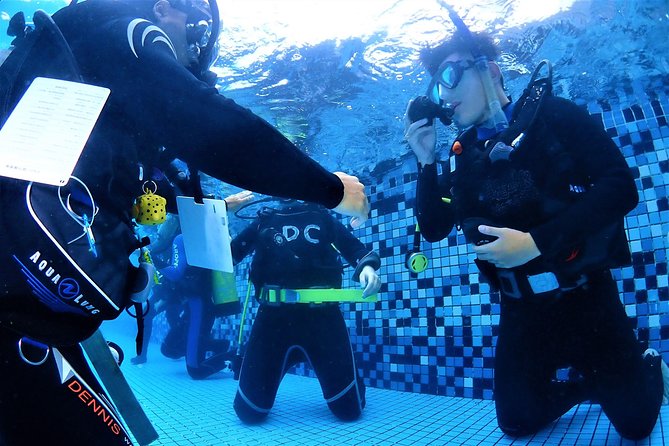
- Day one: forms, gear, and confined-water practice
- Day two: the first marine training sessions
- Day three: four marine sessions and certification
- Why the instruction matters for beginners
- Food, facilities, and the practical side of the center
- Health requirements and who should take care
- Weather, timing, and the limits of the certificate
- Who gets the most from this Kenting course
- FAQ
- Where does the course begin?
- How long does the course take?
- Is English instruction available?
- What is included in the price?
- What age and health requirements apply?
- What happens if bad weather cancels the course?
- Should you book it?
Five useful facts before you book
- English instruction is available: Request fully English teaching when you reserve.
- The course reaches 18 meters: This is the maximum training depth for the certification.
- Small classes keep the pace calm: One coach teaches up to three students.
- Lunch, gear, and insurance are included: You still need a swimsuit and an ID photo.
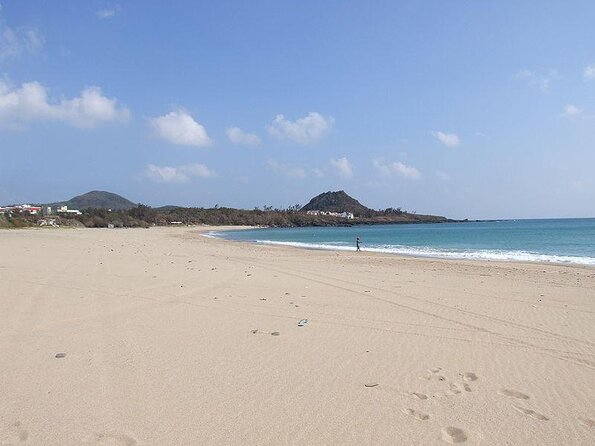
- Training begins at the Taiwan Dive Center in Hengchun: The listed meeting point is No. 55-60, Daguang Road, Hengchun Township, Pingtung County.
What the $83 course actually gives you
At $83, this course offers strong value if the price is current and you complete all three days. You receive scuba equipment, diving insurance, lunch during the course, instruction, confined-water practice, four marine training sessions, and the PADI Open Water certification process.
The value comes from the equipment and instruction alone. Buying or renting a full set of scuba gear for several days can add up quickly. Here, you do not need to arrange tanks, regulators, buoyancy equipment, or exposure protection separately. The course also uses computer watches throughout the program, so you learn with the same kind of information you will rely on after certification.
There are still costs to plan for. Your stay is not included. You need to arrange your own accommodation in or near Hengchun, and you should also allow for transport to the Taiwan Dive Center. Some people who have trained with the center have stayed in its hostel and praised the clean rooms, food, and relaxed common areas, but lodging is not part of the stated course package. Treat it as a separate option, not a guaranteed inclusion.
The price is especially good for someone who already plans to spend a few days in Kenting. It is less convenient if you are trying to squeeze the course into a single day from Kaohsiung. The course location is in Hengchun Township, Pingtung County, in the Kenting area, so check your transport plans carefully before committing.
More dive trips:
Day one: forms, gear, and confined-water practice
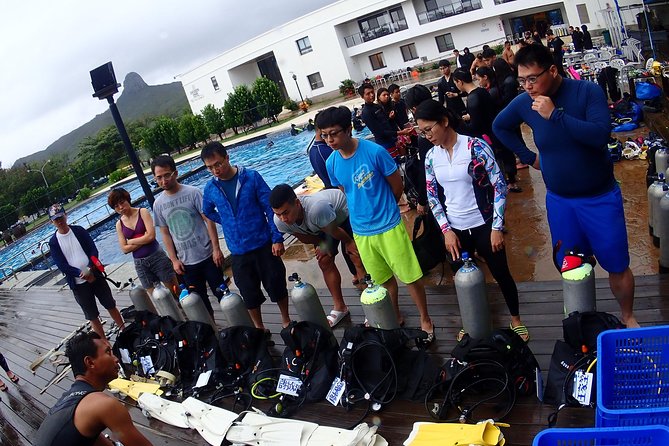
The first morning begins with registration and equipment allocation. The published schedule lists an 8:30 start for paperwork and gear, while the meeting information gives an 8:00 arrival time. I would plan to arrive at 8:00 so you have time to check in, complete forms, and get fitted without rushing.
This first equipment session matters more than it may sound. Your comfort depends on a proper mask, fins, buoyancy device, wetsuit, and regulator setup. Take your time. If a mask leaks or something feels awkward, tell the coach early. The course is designed for beginners, so there is no prize for pretending everything feels perfect.
From 10:00 to noon, you work in confined water. After lunch, training continues from 1:00 to 5:00. This is the longest teaching day, but it is also the day that gives you a safe place to learn basic movements before heading farther from shore.
You will work through the core skills needed for an entry-level certificate. The supplied information does not list every individual exercise, so you should ask the center for the current skills checklist. What is clear is that the first day is focused on repetition, equipment use, and comfort in the water.
The small class format is valuable here. With one coach for three students, the instructor has more time to watch your breathing, body position, and response to each exercise. That can make a real difference if you are nervous or need a skill explained in another way.
The program also promises a slower pace without pressure. That does not mean the course is effortless. You still need to listen closely, practice correctly, and meet the certification requirements. It does mean the class is not built around pushing a large group through as quickly as possible.
Day two: the first marine training sessions
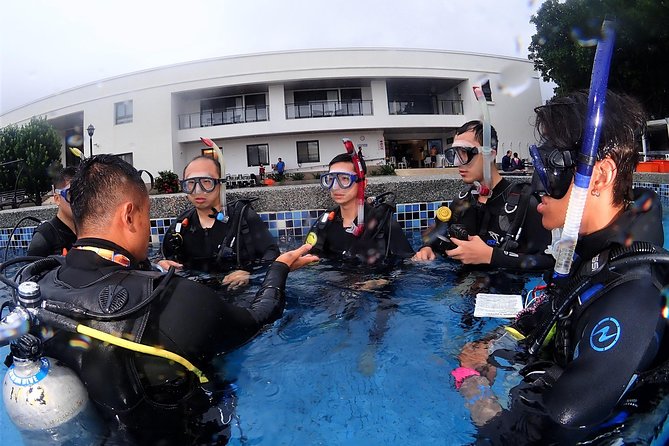
Day two begins at 8:30 with one or two marine training sessions, scheduled until noon. This is your first chance to apply the skills in open water, where conditions can feel different from confined practice.
The shift is useful because it tests more than your memory. You must manage equipment, breathing, buoyancy, and communication while responding to the actual surroundings. The course limits training depth to 18 meters, which is appropriate for an entry-level certification and helps keep the focus on control rather than depth.
Lunch runs from noon to 1:30. That long break is welcome. Scuba training takes physical effort, and eating properly helps you remain alert for the afternoon session.
From 1:30 to 5:00, the schedule calls for a discussion of scuba skills. This gives you time to review what happened in the water, correct problems, and prepare for the next day. I like this structure because it treats mistakes as part of learning rather than something to hide.
The course also introduces a buoyancy bag during the second open-water session. This is a practical skill for underwater travel and surface signaling. You are not simply collecting a certificate; you are learning equipment habits that can make future trips smoother.
Weather may change the order or timing. The course requires suitable conditions, and the exact schedule is subject to the situation on site. Build some flexibility into your Kenting plans rather than booking a flight or long-distance transfer immediately after the final session.
Day three: four marine sessions and certification
The third day is the busiest in the water. From 8:30 to noon, you complete the third and fourth marine training sessions. By this point, the basic equipment routine should feel more familiar, allowing you to concentrate on skill control and awareness.
The underwater camera appears during the fourth open-water session. The instructor takes photographs of your training, giving you a visual record of the course. This is a nice extra, especially for first-time students who want proof of their progress beyond a certificate card.
After lunch, you continue with skill discussion from 1:30 to 4:00. The final issue of the wall certificate is scheduled from 4:00 to 6:00. The program ends back at the meeting point.
Do not treat the last afternoon as a guaranteed early finish. The timetable is approximate, and weather or training needs can affect the day. Keep your evening free. If you need to catch a bus, train, or flight, allow plenty of time.
The completed PADI Open Water certification lets you rent equipment and tanks or hire guides for recreational scuba activities around the world. It is a starting qualification, not a promise that every future site will be suitable. Continue practicing regularly, and consider an advanced course when you want to improve your comfort and skill range.
More experiences of this kind worth comparing:
- Private Custom Kaohsiung Day Tour
★ 5.0 · 81 reviews - Kaohsiung Private Tour – Discover Local Hidden Gems
★ 5.0 · 34 reviews - Kaohsiung: Private City Tour with Fo Guang Shan Museum
★ 5.0 · 26 reviews - Private Classic Kaohsiung Day Tour
★ 5.0 · 17 reviews
Why the instruction matters for beginners
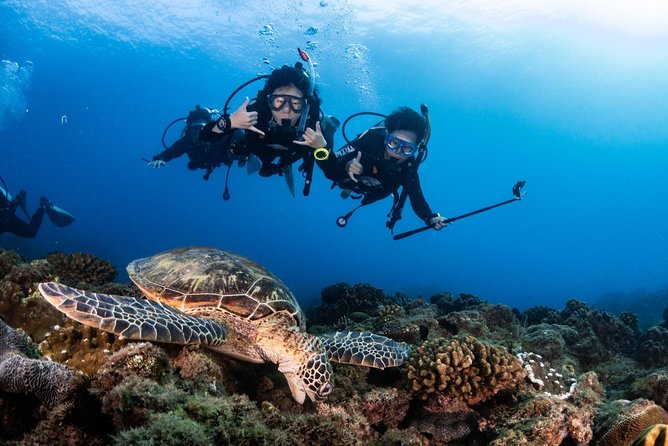
The strongest part of this course is its teaching setup. A 1:3 ratio gives you much more individual attention than a large classroom. Beginners often need small corrections, repeated explanations, or a moment to settle their breathing. That is hard to provide when one coach is responsible for a crowded group.
The coaching team includes instructors named in participant feedback such as Alan, Octopus, Paul, Ryan, Caty, Japon, Vincent, Hank, PT, Rabbit, Fat, and Small Grade. English-language instruction has also received clear praise, with staff described as fluent and able to explain the process carefully.
That does not mean every instructor will suit every student. When booking, request English teaching and ask who will lead your group if you have a preference. Also tell the center about your past water experience, even if it is limited to swimming or snorkeling.
Safety is built into the course through supervision, insurance, skill checks, and a limited training depth. You still have personal responsibility. Pay attention to instructions, communicate discomfort, and do not push through ear pain, breathing trouble, or anxiety just to stay on schedule.
Food, facilities, and the practical side of the center
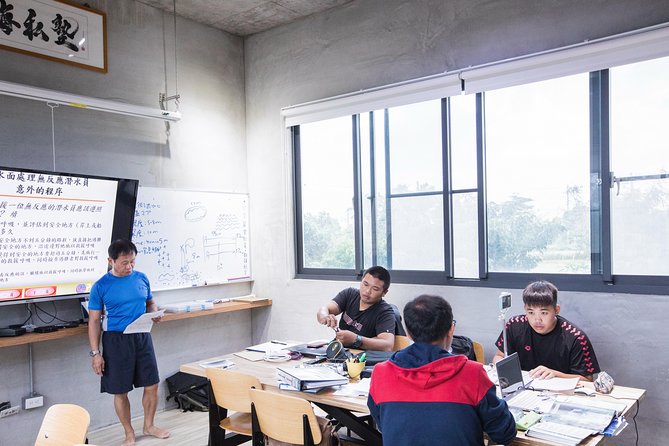
Lunch is included on all three course days. That is a small but meaningful benefit. You do not need to leave the center looking for food between sessions, and you can use the break to eat, rest, and prepare for the afternoon.
The center has also been praised for clean facilities, healthy food, a good breakfast, and a quiet audio room. Those details matter if you decide to stay at the associated hostel, though the course itself does not include accommodation. Some shared-room comments point to possible noise from nearby beds, but the physical tiredness after a full day in the water may help you sleep.
The food is part of the center’s appeal, but you should not assume every meal is included. The stated package covers lunch during the course. Breakfast and dinner belong to separate lodging arrangements or your own plans.
Bring a swimsuit and an ID photo. An electronic file is acceptable, and no specific photo size is stated. You should also bring personal essentials for three active days, but the center supplies the scuba equipment listed in the package.
Health requirements and who should take care
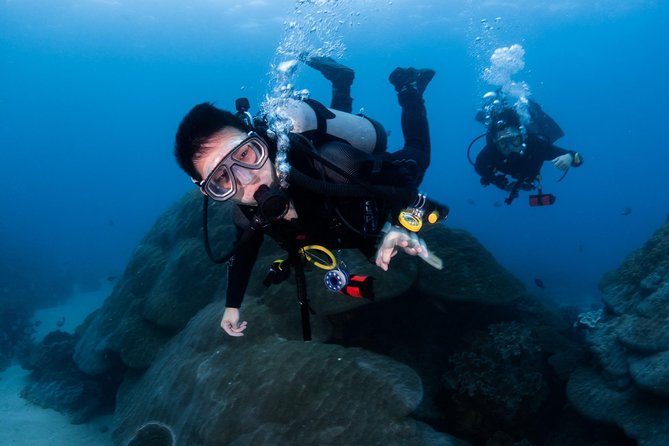
You must be at least 10 years old and in good health. Anyone with an existing physical condition should get medical approval before starting a scuba course.
The health warnings specifically include respiratory conditions involving the bronchial tubes or chest, diabetes, epilepsy, recent illness or surgery within one month, and ear disease or ear surgery. These are not minor administrative notes. Pressure changes and breathing equipment make medical suitability important.
If any of these conditions apply to you, speak with your doctor before booking. Do not rely on a last-minute decision at the center. A medical clearance question can also affect the strict cancellation policy, since the experience is non-refundable and cannot normally be changed.
The course is best for a beginner who can commit to three full days, follow instructions, and remain comfortable in the water. It is less suitable for someone with a tight schedule, uncertain health, or a strong dislike of structured training.
Weather, timing, and the limits of the certificate
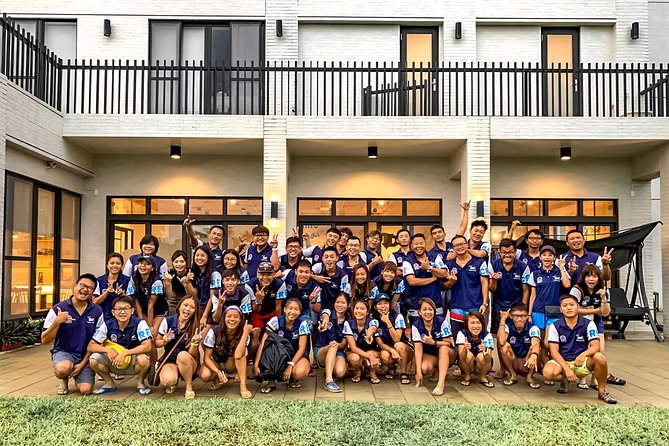
Good weather is required. If conditions force the center to cancel, you are offered another date or a full refund. That is helpful, but it does not remove the need for flexibility. A weather cancellation could still disrupt accommodation and transport plans that you arrange separately.
The certified recreational limit is 40 meters, but the course itself goes only to 18 meters. I would treat that difference as a safety lesson, not a target. Certification gives you access to future equipment rental and guided trips, but regular practice is recommended so your skills do not fade.
The maximum group size for the activity is 20 people, while teaching groups are advertised at one coach for three students. Those numbers serve different purposes. The total activity may be larger, but your direct instruction should remain in a small group.
Who gets the most from this Kenting course
You should consider booking if you want a recognized first scuba certification, prefer patient instruction, and can spend three days in the Kenting area. It is also a good match if you need English teaching, want equipment and lunch bundled into one price, or care about having underwater photos from the final marine session.
The course suits friends traveling together, too. Several pieces of feedback describe pairs learning together and enjoying the supportive atmosphere. Just remember that each person must meet the health and skill requirements individually.
I would be more cautious if you are only visiting Kaohsiung for a short city break. The meeting point is in Hengchun, and the three-day schedule leaves little room for unrelated sightseeing. You also need to arrange your own stay.
FAQ
Where does the course begin?
It begins at Taiwan Dive Center, No. 55-60, Daguang Road, Hengchun Township, Pingtung County, Taiwan 946. The activity ends back at the meeting point.
How long does the course take?
The course lasts approximately three days. The schedule is subject to actual conditions, including weather and training needs.
Is English instruction available?
Yes. Fully English teaching can be arranged. Request it when booking.
What is included in the price?
The package includes scuba equipment, diving insurance, and lunch during the course. Accommodation is not included.
What age and health requirements apply?
You must be at least 10 years old and in good health. Medical approval is recommended if you have a physical condition, including respiratory disease, diabetes, epilepsy, recent surgery or illness, or ear problems.
What happens if bad weather cancels the course?
If poor weather causes the center to cancel, you can choose another date or receive a full refund. Personal cancellations and amendment requests are non-refundable.
Should you book it?
I would book this course if you want a serious beginner certification rather than a quick introductory swim. The low price, small classes, English option, included equipment, meals, insurance, and underwater camera make it an unusually practical package.
Before paying, confirm the current price, English teaching arrangement, meeting time, and accommodation plan. If you can give Kenting three full days and meet the health requirements, this is a strong-value way to begin scuba training. If your schedule is tight or your health is uncertain, wait until you can take the course without rushing.
Recently added in Kaohsiung
- Discover Scuba Diving With Sea Turtles – Xiaoliuqiu, Taiwan★ 5.0 · 3 reviews
- Tainan Ancient Capital & Wushantou Reservoir One Day Tour★ 5.0 · 3 reviews
- Private Tour Shore Excursion in Kaohsiung City★ 5.0 · 4 reviews
- Kaohsiung’s Cruiseship Shore Excursion★ 4.5 · 6 reviews
- Kaohsiung Private Walking Tour with a Local★ 4.0 · 7 reviews
- Kaohsiung: Private Walking Tour with a Local★ 4.4 · 10 reviews
- Full-Day Private Guided Tour in Kaohsiung Port Shore★ 3.5 · 12 reviews
- Kenting, Taiwan|Snorkeling Free underwater photography One-on-one with instructor|Taiwan Diving Snorkeling★ 5.0 · 10 reviews
Kaohsiung Tours, compared.


Kaohsiung Private Tour – Discover Local Hidden Gems
Read our review →


Full-Day Private Guided Tour in Kaohsiung Port Shore
Read our review →
Kenting, Taiwan|Snorkeling Free underwater photography One-on-one with instructor|Taiwan Diving Snorkeling
Read our review →Browse the lists this tour appears in