
Reviewed · SUN MOON LAKE TOURS
Private 4-Day Central & Southern Taiwan Tour (Sun Moon Lake, Kaohsiung, Kenting)
Taiwan gets better the farther south you go. This four-day trip links Sun Moon Lake, Lukang, Kaohsiung, and Kenting in one well-planned route, so you can see temples, coastlines, old streets, and major sights without arranging several hotel changes and train connections yourself. I especially like the scenic variety and the careful mix of guided visits with free time to look around. The main caution is pace: long drives and brief stops mean you see a lot, but rarely linger.
I also like that three nights of hotels, breakfasts, transportation, entrance fees, and an English-speaking guide are included. Guides such as James, Joseph Yi, Billy Lin, Tony, and Walter have received especially strong praise for their care, cultural explanations, and help with meals and train connections. Still, the tour may feel pricey at $1,169 per person, particularly if you prefer independent travel or expect detailed commentary throughout every drive.
In This Review
- The Four Details That Shape This Taiwan Tour
- Is $1,169 a Fair Price?
- Day One: Sun Moon Lake From Puli to Xiangshan
- Day Two: Lukang’s Temples and Old Streets
- Day Three: Kenting’s Pacific Coast
- Day Four: Kaohsiung’s Pavilions and Harbor History
- Guides, Transport, and Daily Comfort
- Who Should Book This Four-Day Route?
- My Verdict: A Strong Introduction to Southern Taiwan
- FAQ
- How long is the Central and Southern Taiwan tour?
- What destinations are included?
- Are meals included?
- What type of accommodation is provided?
- Is the tour private?
- Is transportation back to Taipei included?
The Four Details That Shape This Taiwan Tour
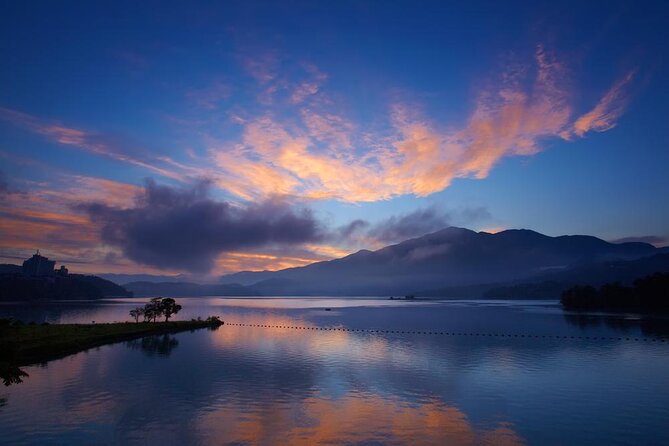
- Sun Moon Lake includes five distinct stops, from Ita Thao village and Ci’en Pagoda to Wenwu Temple and the Xiangshan Visitor Center.
- Lukang gives you the best old-town walking time, with Longshan Temple, Tianhou Temple, and preserved Qing-era streets.
- Kenting brings the coast into the trip, including Maobitou, Eluanbi Lighthouse, Longpan Park, and Hengchun’s old walls.
- Kaohsiung finishes with colorful landmarks, including Lotus Pond, the Dragon and Tiger Pagodas, and the former British Consulate.
- The trip is private for your group, though the exact guide arrangement and transport back to Taipei can depend on group size.
- Meals are not included, so carry cash for food, drinks, tips, and small purchases.
Is $1,169 a Fair Price?
The price needs a little unpacking. At $1,169 per person, this is not a budget bus trip. You are paying for four days of transport from Taipei, a professional guide, three hotel nights, three breakfasts, admission fees listed in the schedule, insurance, and the convenience of a private activity.
That convenience matters in Taiwan. Sun Moon Lake, Lukang, Kenting, and Kaohsiung are spread across the island, and visiting them independently requires careful planning. You would need to compare trains, buses, private transfers, hotel locations, and opening times. This tour removes much of that work.
The value is strongest if you want a broad first look at central and southern Taiwan. It is less attractive if you already know the region, speak enough Mandarin to travel comfortably, or want long stretches of free time. The schedule favors coverage over a slow, local stay.
Accommodation has generally been a strong point. The plan calls for one night near Sun Moon Lake and two nights in a four-star garden villa in Kaohsiung. Some guests found the hotels very comfortable and even better than expected, while one found Hotel del Lago at Sun Moon Lake below standard. That variation is worth noting because hotel assignment can affect how satisfied you feel with the price.
More Sun Moon Lake trips:
- 5-Day Best of Taiwan: Sun Moon Lake, Tainan, Kaohsiung, Hualien
★ 5.0 · 578 reviews - Private 3-Day Tour to Sun Moon Lake and Alishan
★ 4.5 · 34 reviews - Private 2-Day Sun Moon Lake, Puli and Lukang Tour
★ 4.0 · 28 reviews
Day One: Sun Moon Lake From Puli to Xiangshan
The first morning takes you from central Taipei toward the heart of Taiwan. The drive is a large part of the day, but it also gives you a look at the island beyond the capital. Before reaching the lake, you stop in Puli for lunch and a break.
Puli is used here as a practical pause rather than a major sightseeing visit. Since lunch is not included, this is your first reminder to carry cash and ask your guide for help choosing food. The tour information specifically warns that many convenience stores and eateries may not accept credit cards, so do not rely only on a phone wallet or bank card.
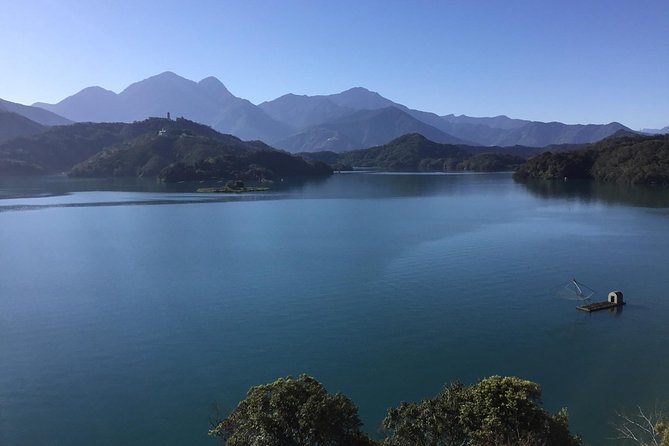
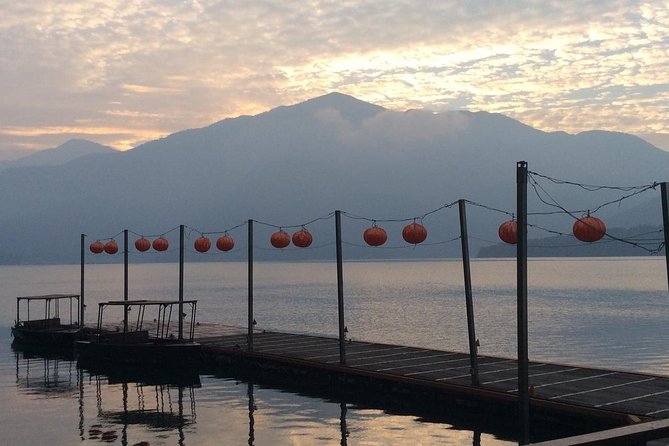
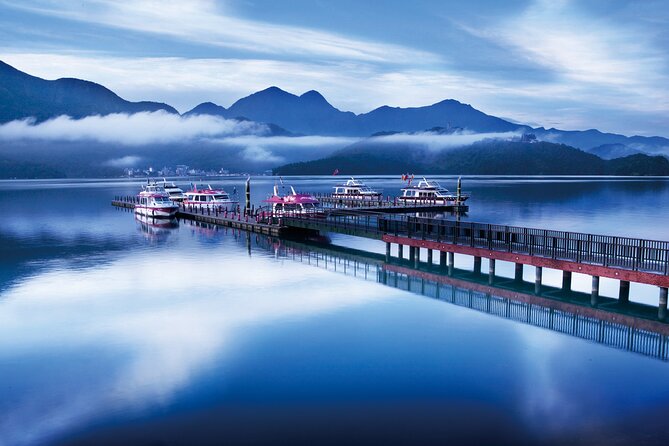
At Sun Moon Lake, Ita Thao Pier gives you about half an hour to get a feel for the lakeside village. Ita Thao, also called Yidashao, has shops, restaurants, and hotels, making it one of the more developed places around the lake. Your time is short, so I would use it to stretch your legs, browse local snacks, and take in the water rather than attempt a full meal.
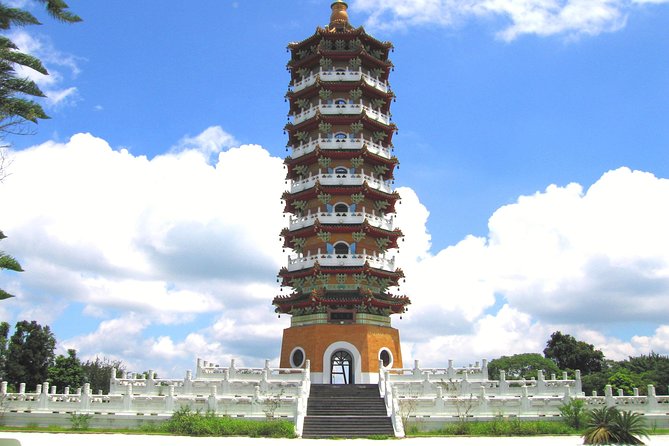
Ci’en Pagoda is one of the day’s most memorable stops. Built in 1971 by Chiang Kai-shek in memory of his mother, the 46-meter pagoda has become a well-known marker of Sun Moon Lake. The visit involves a short stop rather than a long climb-focused outing, so ask your guide how much time is available before setting off.
The Xuanzang Temple offers a quieter cultural pause. It honors Xuanzang, the Tang dynasty monk, whose remains were moved there in 1965 after the temple was rebuilt. The stop lasts about 20 minutes, which is enough to see the main details and hear the basic story, but not enough for a leisurely study of the grounds.
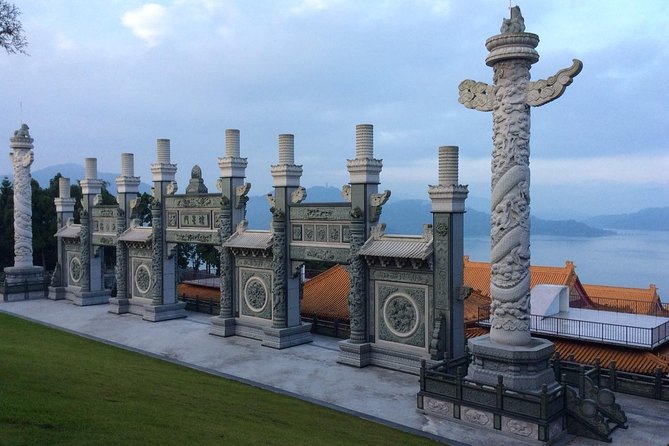
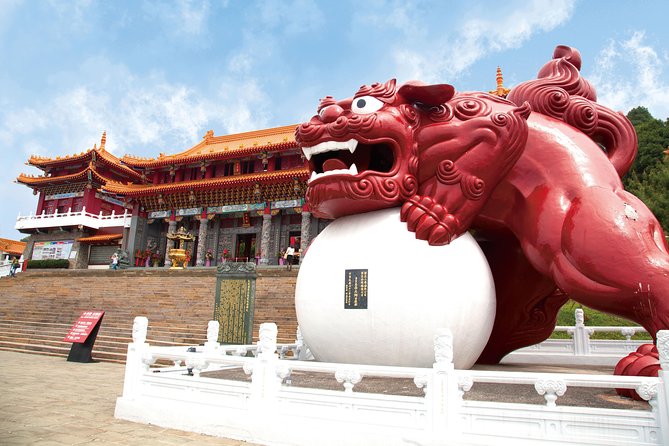
Wenwu Temple brings more scale and color. Built in 1938 and rebuilt in 1969, it combines two earlier temples, Longfeng Temple and Ihuatang. Its position on the northern side of the lake gives the visit a strong sense of place, and the ornate entrance is well suited to photographs.
The day ends at the Xiangshan Visitor Center, a modern building with wood-patterned exteriors and wings designed to resemble arms embracing the earth. This is a useful contrast to the older temples. You see Taiwan’s contemporary public architecture alongside its religious sites, rather than getting four days of similar shrines.
The limitation is clear: the first day contains many short stops. You will gain a strong overview of Sun Moon Lake, but this is not the format for a relaxed lake holiday. If you want a boat ride, a long lakeside walk, or time at the water, you may need to arrange a separate visit.
Day Two: Lukang’s Temples and Old Streets
After breakfast, the route continues to Lukang, one of the trip’s best stops for anyone interested in Taiwan’s older towns. Lukang was once a major port, and its traditional streets and religious buildings offer a sense of how trade and temple life shaped the town.
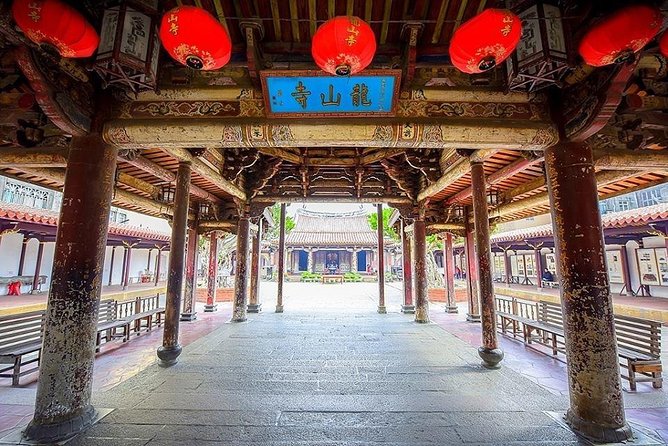
The walking portion is more satisfying than the quick photo stops on day one. Longshan Temple receives about 40 minutes, enough to appreciate its design and listen to the guide’s explanation. The building began as a small local temple before residents expanded it into the larger complex you see today.
Lukang Old Street includes Yaolin Street and Putou Street. The area preserves architecture dating from as early as the Qing dynasty, and one hour here gives you time to walk rather than simply step off a coach for a photograph. This is the place to slow down, look up at old façades, and try local street food.
One particularly useful detail from the trip feedback is that Lukang’s food was considered better and cheaper than food found elsewhere along the route. Since lunch and dinner are your own expense, this is a good place to ask your guide for direct suggestions. English may not appear on every menu, so guide assistance can make the meal easier.
Tianhou Temple adds another layer to the day. It is dedicated to the Goddess of the Sea and is one of Lukang’s three major historic sites. The temple’s connection to maritime travel fits the town’s former role as a port, giving the architecture a clear connection to local life rather than making it just another ornate building.
Lukang is also where guide quality can make the largest difference. A good guide can explain how the temples function, point out details you would otherwise miss, and help you order lunch. Some guides on this trip have been praised for strong English and cultural explanations, while others have been described as quieter. If your guide speaks less during the drive, save your questions for the walking stops.
Day Three: Kenting’s Pacific Coast
Kenting is the trip’s big change of mood. After temples and historic streets, you spend the day among coastal viewpoints and open country at Taiwan’s first national park. The area is known for surfing and diving, but this tour focuses on sightseeing rather than beach time or water activities.
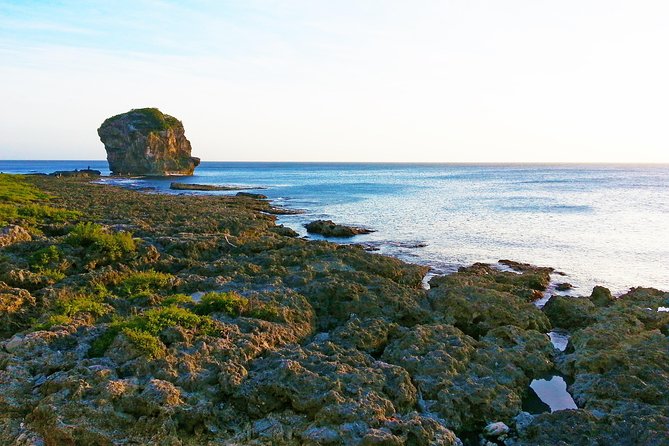
Maobitou Park takes its name from a rock formation that resembles a crouching cat when viewed from a distance. The stop lasts about 30 minutes and is mainly about the coastal view and unusual rock shape. It is a straightforward stop, but the sea air and open outlook make it a welcome break from the coach.
Eluanbi Park includes Eluanbi Lighthouse, first built during the Qing dynasty and later counted among Taiwan’s Eight Views during the Japanese period. The lighthouse gives the park a strong historical marker, while the surrounding grounds provide another chance to see the southern tip of the island.
Longpan Park is different again. It occupies a coral limestone tableland shaped by rainwater, with broad grassland facing the Pacific Ocean. The stop is free and lasts around 30 minutes. Bring a hat and comfortable shoes, since the appeal is the open-air setting rather than an indoor attraction.
Hengchun Old Town provides the day’s cultural finish. Its old city walls have surrounded the town for more than a century and remain among its key features. You get only about 20 minutes here, so think of it as a quick introduction, not a full town visit.
The main drawback is that you do not have much time on the beach. One person specifically wished for more time by the water, and I think that is a fair point. If your idea of Kenting is swimming, surfing, or sitting by the shore, this route may feel too sightseeing-heavy. If your priority is seeing several coastal sites in one day, the schedule works better.
The road from Kenting back to Kaohsiung can also be tiring. The coach makes the journey manageable, but this is a long touring day. Some guides have shown Taiwan-related DVDs during longer drives, which can add useful context, though commentary may be harder to hear over road noise. A microphone would help.
A different sort of day out in Taipei:
- Full-Day Private Custom Taipei City Tour
★ 5.0 · 911 reviews - Full-Day Private Northern Taiwan Tour from Taipei with Pickup
★ 5.0 · 782 reviews - The Award-Winning Private Food Tour of Taipei: The 10 Tastings
★ 5.0 · 716 reviews - Small-Group: Yehliu, Jiufen & Pingxi Day Tour from Taipei
★ 4.5 · 463 reviews
Day Four: Kaohsiung’s Pavilions and Harbor History
The final morning is devoted to Kaohsiung. The city tour visits major sights around the former British Consulate at Takow Cultural Park, Chengcing Lake, and Lotus Pond.
The British Consulate building dates from 1879 and was built for consular and trade affairs. Its hilltop position overlooking the harbor gives you a useful connection between Kaohsiung’s modern port identity and its earlier international trade role. The visit lasts about 40 minutes, making it one of the more substantial stops of the morning.
Chengcing Lake is an artificial lake built as a water source for the city. It has been a public attraction since the 1960s, and the 30-minute stop offers a calmer stretch after the previous day’s coastal road trip. Admission is included here.
Lotus Pond is Kaohsiung’s signature sightseeing area. Around the lake are the Confucius Temple, Spring and Autumn Pavilions, and Dragon and Tiger Pagodas. You see only a selection of the area, but the concentration of dramatic buildings makes it an efficient introduction to the city.
The Spring and Autumn Pavilions date from the 1950s and are dedicated to Kuan Kung, the God of War. In front of them is a statue of Guanyin riding a dragon, representing the Goddess of Mercy. The stop lasts about 15 minutes, so listen closely when the guide explains the symbolism.
The Dragon and Tiger Pagodas are the final major sight. You enter through the dragon’s throat and leave through the tiger’s mouth, a symbolic route intended to turn bad luck into good fortune. It is a quick visit, but the playful design makes it easy to remember.
After Kaohsiung, the return to Taipei depends on group size. You may go back by coach or by express train. A few people have wished the bullet train were automatically included, since it is fast and enjoyable, but the current arrangement does not promise it for every group. Confirm the return plan before you travel.
Guides, Transport, and Daily Comfort
This is a private tour, meaning only your group participates, but the guide and vehicle arrangement may vary. Several guides have earned especially warm praise. James was appreciated for his care, Joseph Yi for making historical sites come alive, and Billy Lin for lively commentary and a strong connection to Kaohsiung. Tony, Walter, and Joe were also described as helpful, patient, and attentive.
That said, guide style is not perfectly uniform. You may receive a highly active storyteller, or you may find that the guide speaks mainly at the sights and leaves you alone during long drives. This matters if you are paying for constant commentary. If you want more explanation, ask direct questions and request a microphone when traffic noise makes conversation difficult.
The coach is air-conditioned, and transportation is included throughout the touring portion. A small amount of walking is involved, but comfortable shoes still make sense because you will be visiting temple grounds, old streets, parks, and lookout areas.
Room arrangements are also worth understanding. Standard rooms generally contain two single beds or one double bed for two people. Twin-share means two people in one standard room, while private accommodation means one person in a standard room at an extra cost. Groups with an odd number may be placed in a triple room, or one person may receive a private room for an additional fee, depending on availability.
Who Should Book This Four-Day Route?
I would choose this tour if you have limited time in Taiwan and want an organized look at the center and south without managing several transfers. It suits first-time visitors, couples, families, and anyone who values a guide’s help with temples, meals, hotels, and train connections.
It also works well for people who want variety. In four days, you see a mountain lake, a historic port town, Pacific viewpoints, a national park, and a major southern city. That is a lot of Taiwan in a short package.
I would hesitate if you want beach time, independent meals, or long visits at each attraction. The route is full, the stops can be brief, and lunch and dinner are not included. Carry enough cash for meals, drinks, souvenirs, and tips.
The booking policy allows a full refund when you cancel at least six full days before the start time. Cancellations two to six days ahead receive 50 percent, while cancellations less than two full days ahead are not refunded. Confirmation is sent within 48 hours, subject to availability.
My Verdict: A Strong Introduction to Southern Taiwan
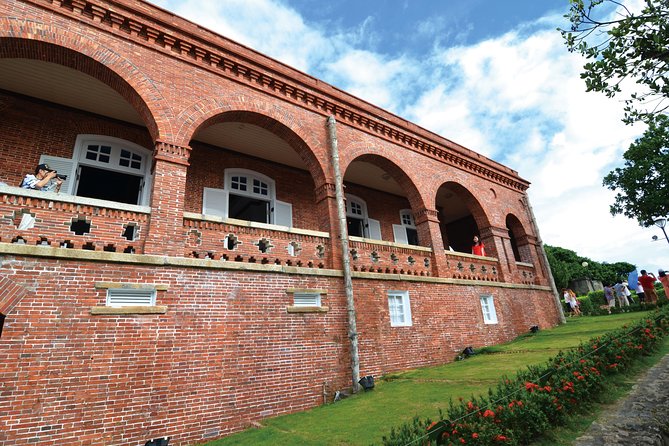
This is a useful, well-rounded introduction to Taiwan beyond Taipei. Sun Moon Lake and Lukang are the strongest parts, while Kenting supplies the most memorable outdoor views and Kaohsiung gives you an efficient final look at southern city life.
The tour’s best feature is not one monument. It is the range of experiences packed into four days, with hotels and transportation already handled. The tradeoff is time: you get a broad picture, not a slow, intimate stay.
Book it if you want structure, English guidance, comfortable transport, and a first taste of central and southern Taiwan. Skip it if you want to linger at the beach, choose every meal yourself, or travel at a slower pace. At $1,169, the value depends on how much planning you want removed. For a first visit, that convenience can be worth the cost.
FAQ
How long is the Central and Southern Taiwan tour?
The tour lasts approximately four days and includes three nights of accommodation.
What destinations are included?
The route includes Puli, Sun Moon Lake, Lukang, Kenting National Park, Hengchun, and Kaohsiung before returning to Taipei.
Are meals included?
Three breakfasts are included. Lunch and dinner are not included, so you should budget separately and carry enough cash.
What type of accommodation is provided?
The tour includes one night near Sun Moon Lake and two nights in a four-star garden villa in Kaohsiung. Standard rooms may have two single beds or one double bed.
Is the tour private?
Yes. Only your group participates in the private tour or activity.
Is transportation back to Taipei included?
Yes, round-trip transportation is included. The return may be by coach or express train, depending on the size of your group.
Recently added in Taipei
- Keelung Shore Excursion: Private 6H Natural Wonder & Seafood Tour★ 5.0 · 3 reviews
- One-way Private Transfer between Jiufen and Taipei★ 5.0 · 3 reviews
- 8-Day Around Taiwan Private Tour★ 5.0 · 3 reviews
- National Palace Museum Northern Branch Taiwan Admission★ 4.5 · 3 reviews
- 12hrs – Chiayi Meteor Garden Classic Tour From Taipei★ 5.0 · 3 reviews
- Yilan 1-Day Private Tour to Kavalan Whisky & Cultural Gems★ 4.5 · 3 reviews
- Best of Taiwan 9 Days Tour★ 3.5 · 3 reviews
- Full Day Private History Tour in Taipei City★ 4.5 · 3 reviews
Sun Moon Lake Tours, compared.
5-Day Best of Taiwan: Sun Moon Lake, Tainan, Kaohsiung, Hualien
Read our review →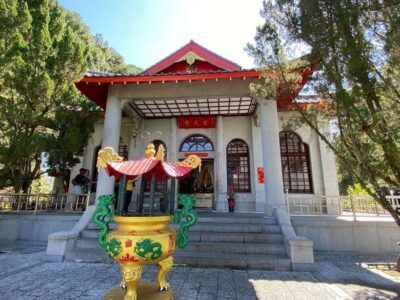
Private 3-Day Tour to Sun Moon Lake and Alishan
Read our review →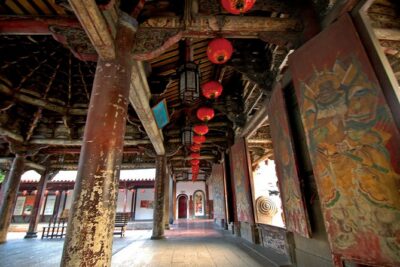
Private 2-Day Sun Moon Lake, Puli and Lukang Tour
Read our review →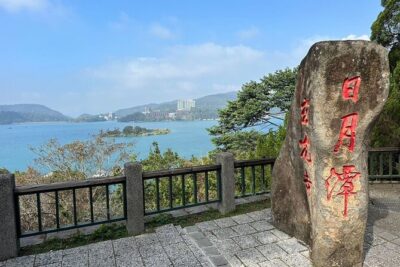
Nantou Day Tour: Sun Moon Lake & Ita Thao Pier from Taipei
Read our review →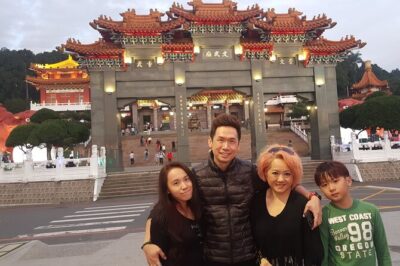
Exclusive 3-Day Sun Moon Lake & Alishan Private Tour
Read our review →Browse the lists this tour appears in