
Reviewed · TEA PLANTATION TOURS
Tainan Culture Trip: Chinese Tea Ceremony_Oolong Tea
Tea can change the pace of a Tainan day. At the TOT House, King leads a private 90-minute Chinese tea ceremony that combines Taiwanese tea culture, careful brewing, fine ceramics, and easy conversation. I like the chance to taste at least four oolongs side by side, and I like that the session works for beginners as well as serious tea drinkers.
The setting is personal: the front door looks like an ordinary home, and you simply ring the bell. King’s calm teaching style, strong English, and willingness to answer questions make the session feel more like a conversation than a formal lecture. One thing to consider is that this is a seated, detail-focused activity, and it is not suitable for children under five or people with mobility impairments.
In This Review
- Key points about this Tainan tea ceremony
- Entering the TOT House in Southern Taiwan
- The first lesson: what makes oolong different
- Tasting at least four Taiwanese oolongs
- Gaiwan, terracotta, and the craft of brewing
- Tea etiquette without the stiff formalities
- A calm break in a full Tainan itinerary
- The $50 price and what you receive
- Practical manners before you arrive
- Who will enjoy this most?
- Should you book the TOT House tea ceremony?
- FAQ
- Where does the tea ceremony take place?
- How long does the ceremony last?
- How much does the experience cost?
- How many teas will I taste?
- Is the ceremony conducted in English?
- What brewing equipment will I see?
- Will I try different tea cups?
- Can I record video during the ceremony?
- What should I avoid before the ceremony?
Key points about this Tainan tea ceremony
- At least four Taiwanese oolongs: Compare floral, fruity, woody, and roasted notes as the tea changes through repeated infusions.
- A private group for up to two: The $50 price covers the group, not each person, making it good value for a couple or two friends.
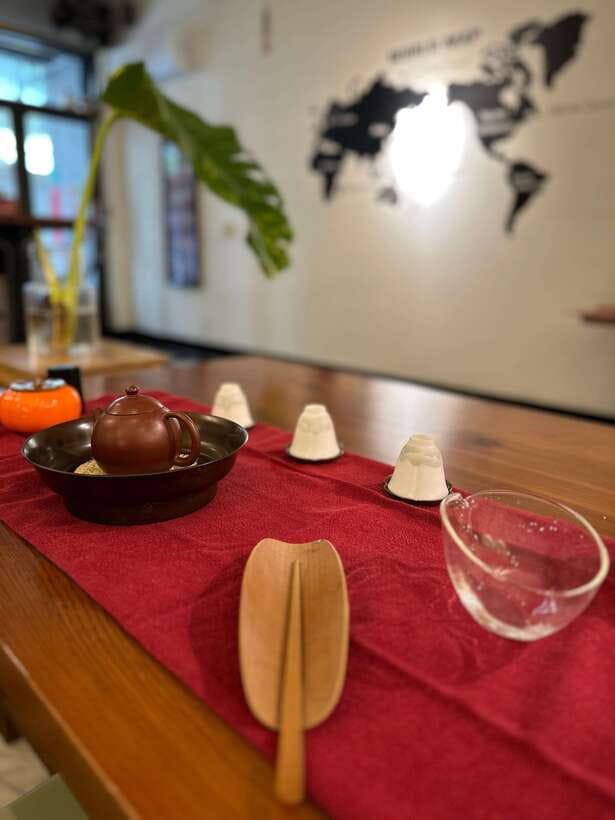
- Two brewing styles: See both a Gaiwan and terracotta teapot used during the ceremony.
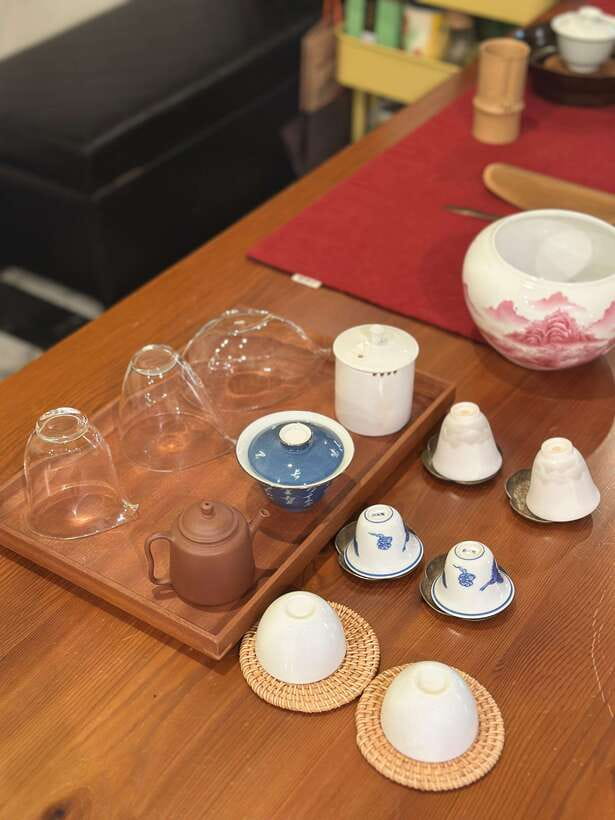
- Three or more cup styles: Different shapes and textures show how the vessel can affect the way tea feels and tastes.
- A useful cultural lesson: Learn tea etiquette, gestures of thanks, tea’s role in daily life, and its links to traditional Chinese medicine.
- An English-speaking host in central Tainan: King also shares advice about Tainan, food, temples, and places to buy Taiwanese tea.
Entering the TOT House in Southern Taiwan
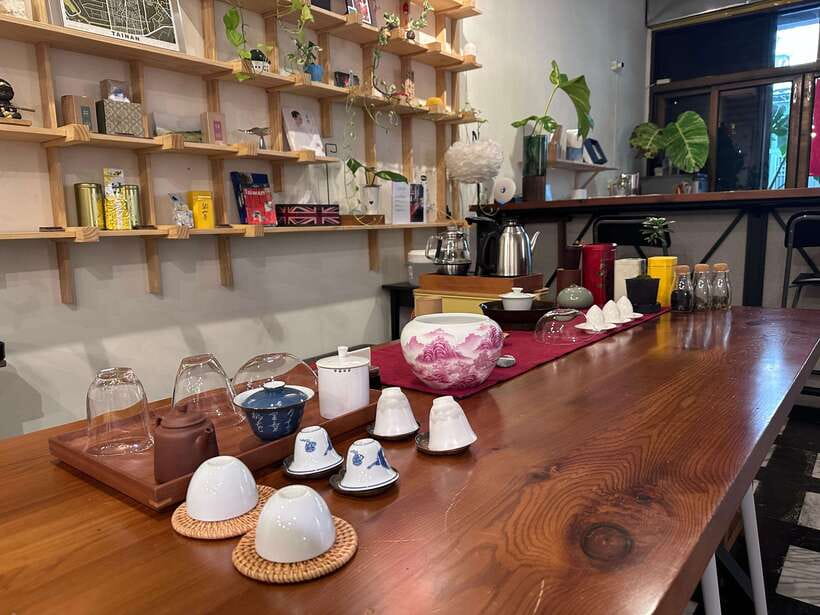
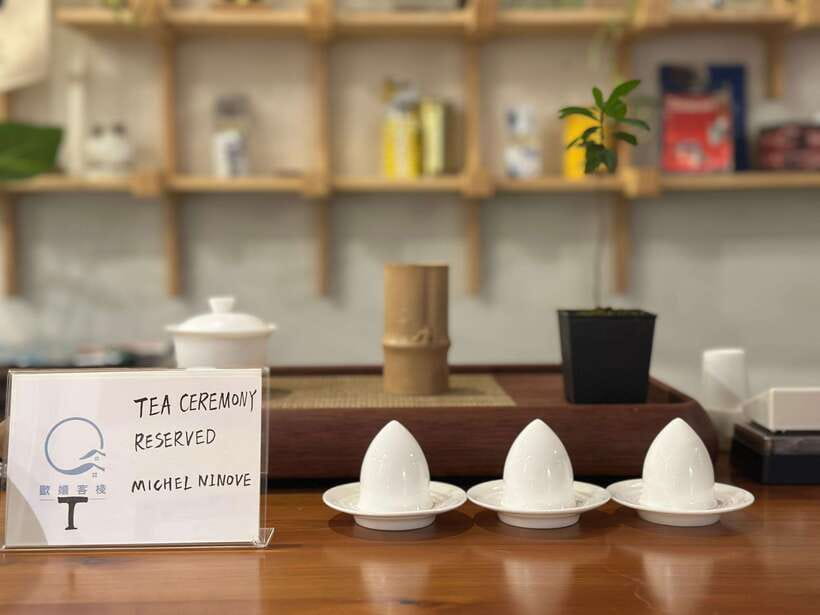
The meeting point is the TOT House, short for Taiwan Oolong Tea House. Do not expect a large shopfront or a sign-filled tourist venue. The entrance looks like a normal household, so press the bell when you arrive.
That small detail tells you something about the mood. This is not a loud tasting room where groups rotate through every few minutes. It is a private appointment in a personal setting, designed for a slow exchange between you, your companion, and King.
You should contact King by WhatsApp or email at [email protected] after booking. That step matters because the activity is arranged privately, and you will want to confirm the meeting details before you set off across Tainan.
The ceremony is conducted in English. English is also the language used for questions about tea production, Taiwanese customs, brewing, ceramics, and Tainan itself. Past sessions have included solo visitors, couples, and tea enthusiasts with very different levels of experience, so you do not need to know technical tea terms before arriving.
More tea experiences:
- From Taipei: Thousand Island Lake and Pinglin Tea Plantation
★ 4.7 · 519 reviews - Thousand Island Lake and Pinglin Tea Plantation from Taipei
★ 4.5 · 172 reviews - Xiao Long Bao, Beef Noodles & Boba Tea Cooking Class in Taipei
★ 5.0 · 159 reviews
The first lesson: what makes oolong different
The session begins with the story and meaning of Chinese tea. You learn about tea’s origins in China, the broad types of tea, and the place oolong occupies among them.
Oolong is especially useful for a tasting lesson because it can show a wide range of flavors. Depending on how the tea is made and prepared, you might notice floral or fruity notes, along with woody or roasted qualities. The point is not to guess a perfect answer. It is to notice how aroma, flavor, texture, and aftertaste change from one cup to the next.
King explains the cultural side as well as the drinking side. Tea has a role in traditional Chinese medicine, family and social customs, ritual behavior, and ordinary daily life. That background helps you understand why the ceremony is deliberate and why serving tea involves more than pouring hot water into a cup.
I particularly like this balance. You are not simply told that Taiwanese tea is important. You are shown how taste, objects, manners, and social habits fit together.
Tasting at least four Taiwanese oolongs
The main pleasure is the tasting. You sample at least four kinds of oolong, and the different teas give you a chance to compare their character rather than judge one cup in isolation.
A useful way to approach this is to smell before sipping. The aroma may seem floral, sweet, toasted, or earthy. Then taste the tea slowly and notice its weight, smoothness, bitterness, sweetness, and lingering finish.
Oolong often changes through several infusions. The first brew can introduce the tea’s main scent, while later brews may soften, open, or reveal a different balance. King encourages you to pay attention to that evolution, which makes the tasting more active than simply choosing a favorite flavor.
One visitor drank five Taiwanese oolongs during a relaxed session and appreciated discussing both flavor and feel. That is a helpful clue about the pace. You are not rushing through four tiny samples. You have time to compare, ask questions, and return to the way each tea develops.
The tasting also works if you are new to tea. You do not need a trained palate. If you can say that one tea seems lighter, toastier, sweeter, or more fragrant than another, you are already doing the useful part.
Gaiwan, terracotta, and the craft of brewing
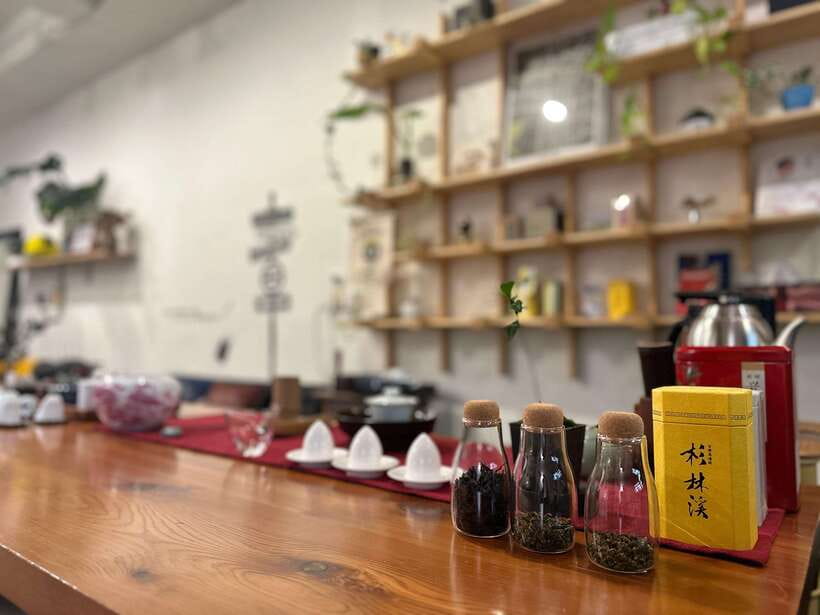
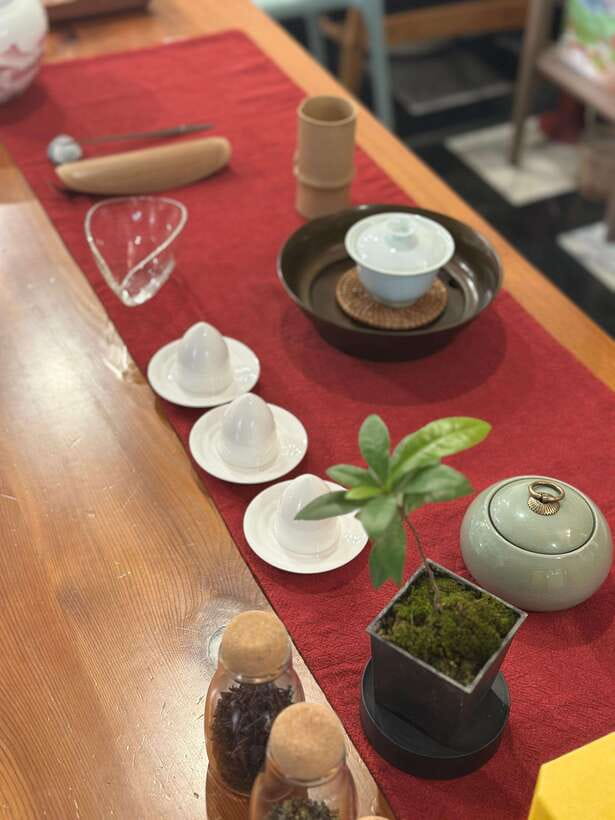
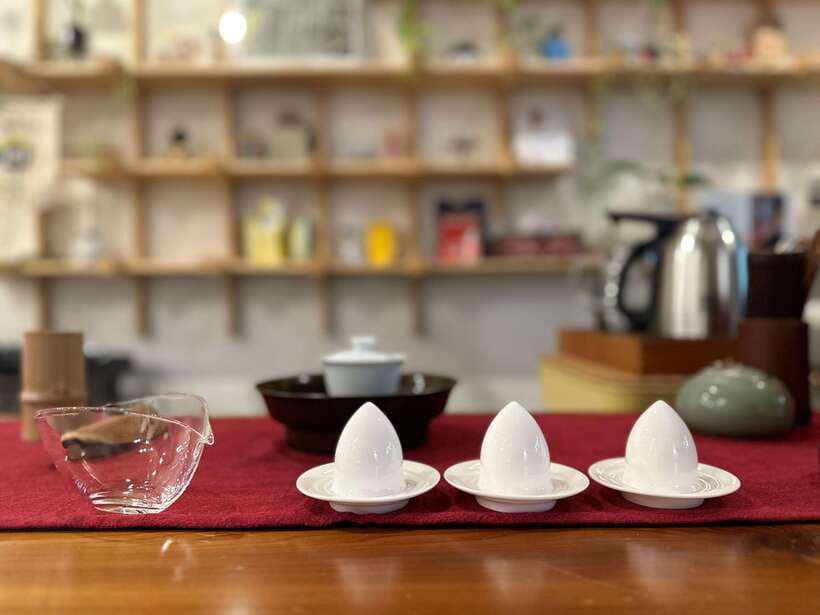
The equipment receives proper attention. You see at least two brewing tools, including a Gaiwan and terracotta teapots.
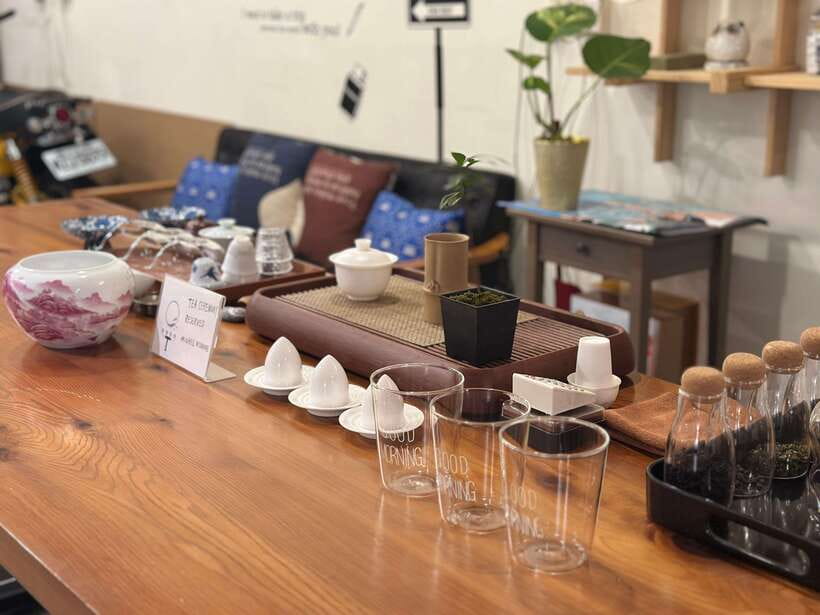
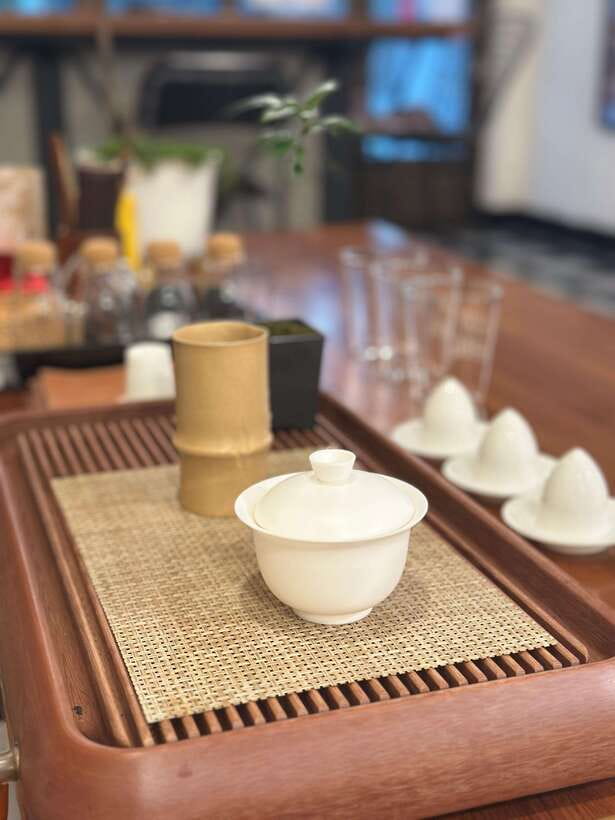
A Gaiwan is a lidded bowl used to brew and pour tea. Its open design lets you see the leaves and smell the tea clearly. Terracotta teapots bring a different feel to the process, with a more traditional, tactile presence in the hand.
The lesson is not only about function. King points out the craftsmanship and artistry of the teapot, cups, tray, and related tools. This helps you notice details you might otherwise miss, such as the size of a vessel, the way a lid fits, the texture of a cup, or the small movements used to handle hot water.
The cups are part of the comparison too. You try at least three types with different shapes and textures. That variety gives the ceremony a practical edge: the same tea can feel different depending on the cup you hold, the amount it contains, and the way its shape directs aroma toward your nose.
A visitor who had already spent time around tea particularly enjoyed seeing different pots and cups used with different oolongs. That is useful for anyone considering buying tea ware in Taiwan. You get a basic sense of why a tea drinker might choose one pot or cup over another, rather than shopping by appearance alone.
A different sort of day out in Taiwan:
- From Taipei: Shifen, Jiufen, and Yehliu Guided Day Trip
★ 4.6 · 1,654 reviews - Full-Day Private Custom Taipei City Tour
★ 5.0 · 911 reviews - From Taipei: Yehliu, Jiufen, and Pingxi Day Tour
★ 4.7 · 892 reviews - Taipei: Jiufen Night View and Shifen Day Tour
★ 4.6 · 870 reviews
Tea etiquette without the stiff formalities
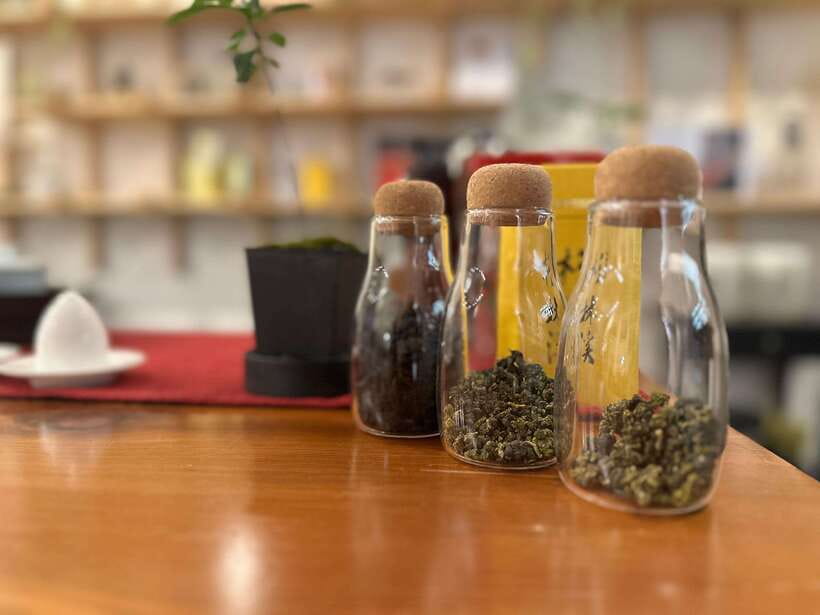
Tea ceremonies can look intimidating if you are unfamiliar with the gestures. Here, the manners are explained in a friendly and usable way.
You learn how to accept a tea cup, how to behave while tea is being served, and how to show gratitude. Traditional courtesies are not treated as a test. King explains the meaning behind them, so you can take part without worrying that you will make a mistake.
The slower pace also gives you time to watch. Notice how the tray organizes the tools, how the cups are handled, and how each stage follows the last. The ceremony asks for attention, but it does not demand silence or solemnity.
That makes the activity a good introduction for someone who wants cultural context without a long academic talk. You can ask why a gesture matters, how the practice relates to Taiwanese life, or how tea is served in different settings.
Basic brewing techniques are also part of the session. One visitor interested in making tea at home left with a better grasp of the fundamentals. If you want to repeat the experience in your own kitchen, pay attention to the order of the steps and ask questions while the tools are in use.
A calm break in a full Tainan itinerary
Tainan can fill a day quickly with temples, old streets, food stops, and historic sights. A tea ceremony gives you a very different rhythm.
The deliberate movements encourage you to sit still and focus on what is in front of you. You smell the tea, taste it, listen to the explanation, and let the conversation develop. It is a welcome contrast to checking off one more sight.
The session is also social, but not forced. King is described as warm, funny, kind, and gracious, and his style leaves room for questions. Several people especially valued the personal conversation about Tainan, tea culture, and places to eat.
If you have only a short visit, this can be more than a tea tasting. King has offered suggestions for food and sightseeing, and one visitor with a tight train schedule received help rearranging the session. Another visitor was shown nearby temples and given additional context about the city.
Those extras should not be treated as a guaranteed walking tour. The listed activity is the tea ceremony. Still, the host’s local advice can make the appointment more useful if you are trying to plan a compact Tainan visit.
The $50 price and what you receive
The price is $50 per private group of up to two people. For two people, that works out to $25 each for 90 minutes of guided instruction, at least four oolong tastings, several cup styles, and demonstrations with a Gaiwan and terracotta teapots.
That is a fair price if you care about Taiwanese tea and want personal attention. A public tasting may cost less per person, but it is unlikely to give you the same amount of time for questions or the same control over the pace.
The value is strongest for two people booking together. A solo visitor pays the same group price, so the cost per person is higher. You also need to budget separately for transportation to the venue and meals, since neither is included.
The activity does not include a meal. Tea can be filling in its own way, but do not treat this as a replacement for lunch or dinner in Tainan. Plan food before or after the appointment.
Free cancellation is available up to 24 hours before the session for a full refund, and you can reserve now and pay later. Starting times depend on availability, so check the schedule before building the rest of your day around it.
Practical manners before you arrive
The house setting and delicate equipment call for a little care. Avoid strong perfume, since fragrance can interfere with the aroma of the tea.
Smoking is not allowed, and you cannot use your cellphone or record video during the ceremony. This rule is sensible. A phone can pull your attention away from the tasting, while video recording can disturb the calm and the host’s presentation.
You may want to take notes after the session rather than during it. The most useful things to remember are the names or styles of teas you prefer, the flavors you noticed, and any shop recommendations King gives you.
The activity is listed as wheelchair accessible, but it is also marked as not suitable for people with mobility impairments. Because those details do not fully match, contact the provider before booking if you have specific access needs. The experience is not suitable for children under five.
Who will enjoy this most?
I would choose this for:
- A couple wanting a quiet, private cultural activity
- A solo visitor interested in Taiwanese tea
- Someone who has never attended a Chinese tea ceremony
- A tea enthusiast who wants to compare oolongs and brewing vessels
- A visitor looking for local advice about Tainan
- Anyone with a free 90-minute gap between sightseeing plans
The experience is especially good for people who enjoy asking questions. King’s teaching covers tea production, history, etiquette, ceramics, brewing, and local culture, so you can guide the conversation toward what interests you most.
It is less suitable if you want a fast, casual drink, a large social group, a meal, or a video-friendly activity. It also may not work well for young children, since the session relies on sitting quietly and handling fragile objects with care.
Should you book the TOT House tea ceremony?
Yes, if you want a personal introduction to Taiwanese oolong rather than a quick sample at a shop. The strongest reasons are the private format, the range of teas, the use of different vessels, and King’s warm English-language teaching.
Book it as a cultural activity, not just a beverage stop. You will learn why the cups and pots matter, how tea etiquette works, and how to pay attention to flavor as it changes. The session can also help you make better choices if you plan to buy Taiwanese tea or ceramics later.
I would skip it only if your schedule is too tight for a slow 90-minute pause, or if your group includes children under five. For two adults who want an unhurried, thoughtful stop in Tainan, the $50 group price is strong value.
FAQ
Where does the tea ceremony take place?
It takes place at the TOT House, also called the Taiwan Oolong Tea House, in Southern Taiwan. The front door looks like a normal household, so press the bell when you arrive.
How long does the ceremony last?
The ceremony lasts 90 minutes. Starting times depend on availability.
How much does the experience cost?
The price is $50 per private group of up to two people.
How many teas will I taste?
You will taste at least four kinds of oolong tea. Some sessions include five Taiwanese oolongs.
Is the ceremony conducted in English?
Yes. The instructor speaks English, and the ceremony is conducted in English.
What brewing equipment will I see?
The session includes at least a Gaiwan and terracotta teapots. You will also see and use other tea ceremony tools.
Will I try different tea cups?
Yes. You will try at least three kinds of tea cups with different shapes and textures.
Can I record video during the ceremony?
No. Video recording is not allowed, and cellphone use is also restricted during the ceremony.
What should I avoid before the ceremony?
Avoid wearing too much strong perfume, since it can affect the aroma of the tea. Smoking is not allowed during the activity.
Recently added in Taiwan
- Keelung Shore Excursion: Private 6H Natural Wonder & Seafood Tour★ 5.0 · 3 reviews
- One-way Private Transfer between Jiufen and Taipei★ 5.0 · 3 reviews
- 8-Day Around Taiwan Private Tour★ 5.0 · 3 reviews
- National Palace Museum Northern Branch Taiwan Admission★ 4.5 · 3 reviews
- 12hrs – Chiayi Meteor Garden Classic Tour From Taipei★ 5.0 · 3 reviews
- Discover Scuba Diving With Sea Turtles – Xiaoliuqiu, Taiwan★ 5.0 · 3 reviews
- 1D Tour to Cingjing Farm from Taichung★ 4.5 · 3 reviews
- Yilan 1-Day Private Tour to Kavalan Whisky & Cultural Gems★ 4.5 · 3 reviews
Tea Plantation Tours, compared.
Thousand Island Lake and Pinglin Tea Plantation
Read our review →
Thousand Island Lake and Pinglin Tea Plantation from Taipei
Read our review →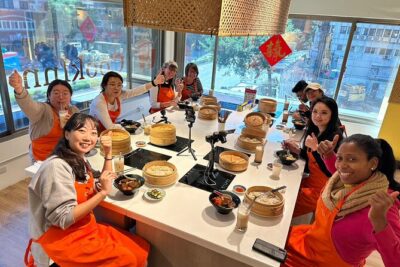
Xiao Long Bao, Beef Noodles & Boba Tea Cooking Class in Taipei
Read our review →
Pinglin Tea Culture and Maokong Guided Day Tour
Read our review →
Tea of Taipei: Small-Group Tour with Taipei City Sightseeing
Read our review →
Pinglin Tea Culture & Maokong Day Tour from Taipei
Read our review →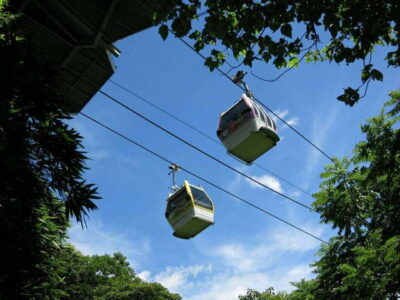
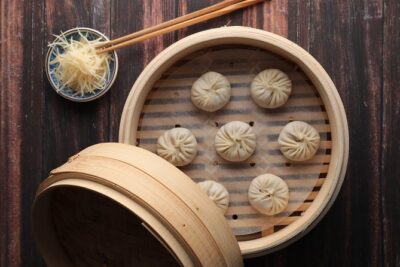
Xiao Long Bao & Boba Tea Cooking Class in Taipei
Read our review →Browse the lists this tour appears in