
Reviewed · TAIWAN
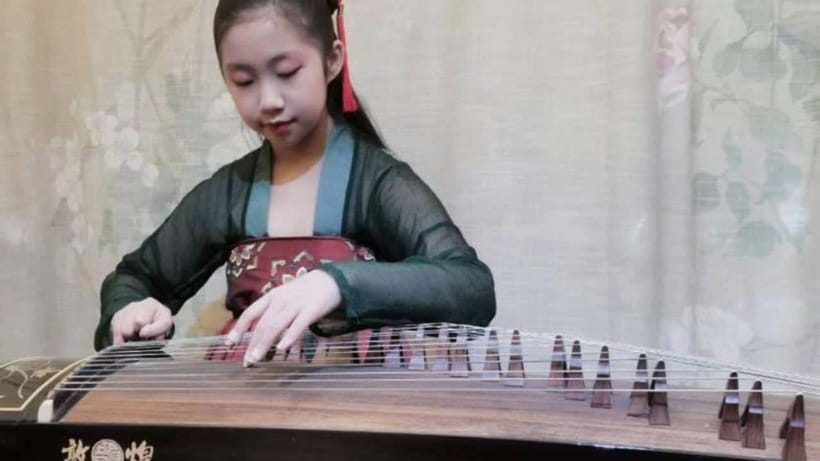
Wear Hanfu and play guzheng
Dress up, then make music. This one-hour Beitou activity pairs traditional Hanfu clothing with a beginner-friendly guzheng lesson, giving you more than a costume photograph. I like the clear format: ten minutes to choose clothing, forty minutes of music instruction, and ten minutes to record a short video. I also like that you can join alone, with no music training or ability to read notes.
The main catch is that the activity is built around the guzheng lesson and video, not a full hair-and-makeup session. Hanfu sizes and styles are prepared in advance, so you should provide your height and weight when booking. If no suitable outfit is available, there is no refund, and the classroom is on the second floor with no elevator.
In This Review
- Key points to know before you book
- Why this Beitou activity works so well for first-timers
- Finding 箏工坊 KOTOMUSIC from Beitou MRT
- The first ten minutes: choosing and wearing Hanfu
- Forty minutes of guzheng practice
- The final ten minutes: recording your short video
- Is $50 good value for one hour?
- Who should book this experience?
- Timing, language, and cancellation details
- Should you book Wear Hanfu and Play Guzheng?
- FAQ
- Where does the Hanfu and guzheng activity meet?
- How long does the activity last?
- Do I need musical experience?
- Which languages are available?
- Is hair and makeup included?
- Is the classroom accessible by elevator?
Key points to know before you book
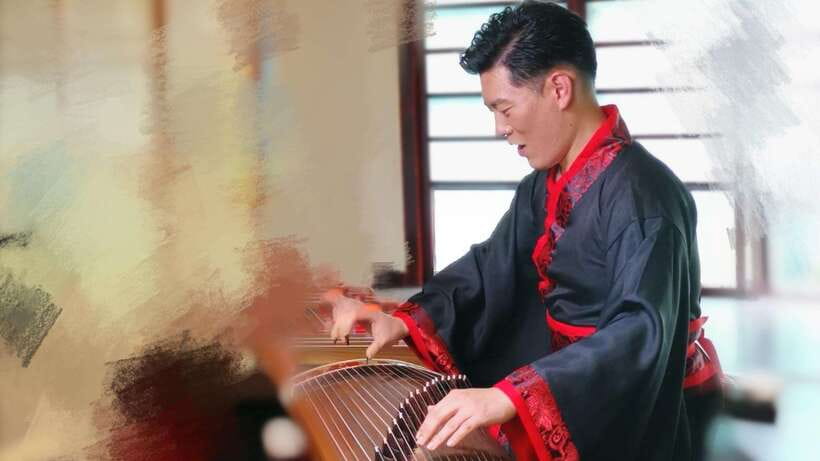
- You can learn a simple song in one hour: The lesson is designed for complete beginners, with no instrument or music-reading experience needed.
- The clothing is part of the activity: You choose and change into a Hanfu outfit on site, then add simple hair accessories and other provided decorations.
- The instructor can teach in three languages: Traditional Chinese, English, and Japanese are supported.
- The group is limited to four people: A small class gives you more direct help and makes the recording easier to manage.
- The location is one minute from Beitou MRT Station: Use Exit 2, turn left, cross the road, and walk for about one minute.
- The final video gives the hour a purpose: You do not simply practice and leave. You finish with a short recording to keep or share.
Why this Beitou activity works so well for first-timers
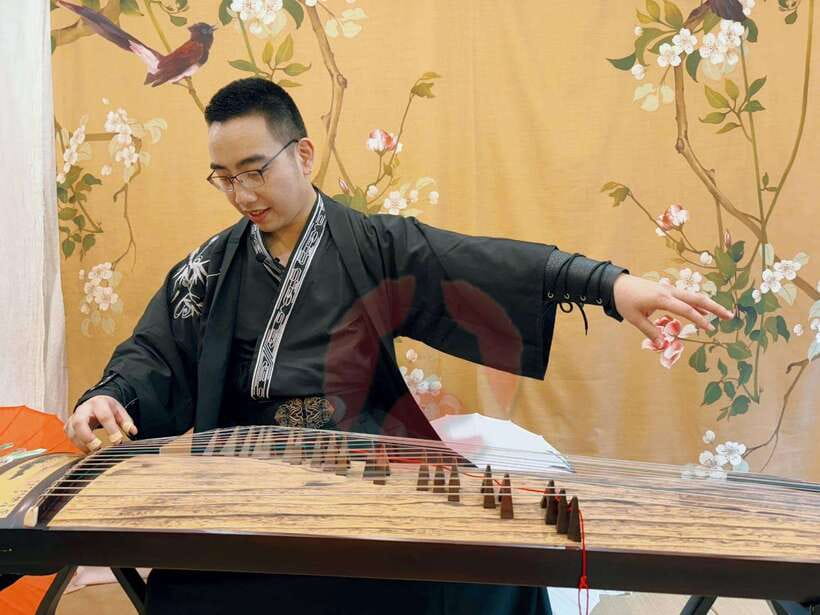
The guzheng is a traditional Chinese zither with strings played by plucking. You do not need to arrive knowing its structure, musical vocabulary, or notation. The class is planned around a simple melody that you can learn during the session, which makes the experience approachable even if your last music lesson was years ago.
I like this format because it avoids the usual problem with short cultural activities: you look at an object, hear a quick explanation, take a photograph, and move on. Here, you use the instrument yourself. Even a basic melody gives you a small sense of how the instrument works and why its sound is so distinctive.
The lesson also has a clear endpoint. You are working toward a short video, so the practice has a practical goal. You will probably make mistakes, but the instructor’s job is to guide you through enough repetition that you can complete the piece with confidence.
The small group matters. With a maximum of four people, the instructor can watch your hand position, correct your timing, and help you repeat difficult parts. The experience may be combined with other participants, so it is not guaranteed to be private, but the group remains limited.
Other trips in Taipei travellers pair with this one:
- Full-Day Private Custom Taipei City Tour
★ 5.0 · 911 reviews - Full-Day Private Northern Taiwan Tour from Taipei with Pickup
★ 5.0 · 782 reviews - The Award-Winning Private Food Tour of Taipei: The 10 Tastings
★ 5.0 · 716 reviews
Finding 箏工坊 KOTOMUSIC from Beitou MRT
The meeting point is Exit 2 of Beitou MRT Station. This detail matters because the instructions specifically warn you to use that exit. After leaving the station, turn left, cross the road, and walk for about one minute to No. 13-3, Lane 2, Guangming Road, Beitou District, Taipei City.
The short walk makes this easy to add to a day in Beitou. You do not need to arrange a long taxi ride or set aside half a day for transport. The activity takes place at 箏工坊 KOTOMUSIC, an indoor workshop on the second floor.
Give yourself enough time to find the entrance and arrive promptly. The session is tightly timed, and arriving late can affect the experience for everyone in the group. The instruction says not to be late, so I would aim to reach Exit 2 a little early rather than attempt a last-minute dash from the platform.
You should wear clothing that is easy to put on and take off. You will change into Hanfu shortly after arrival, and simple clothing will make that ten-minute portion less awkward.
The first ten minutes: choosing and wearing Hanfu
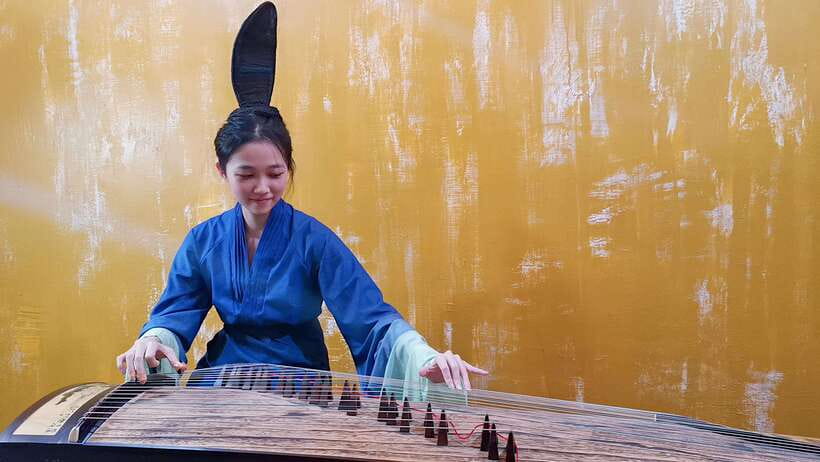
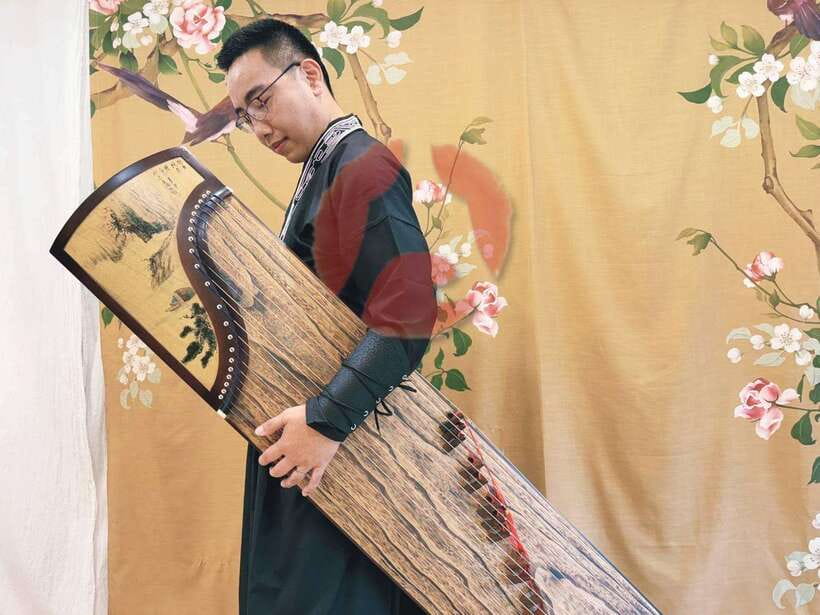
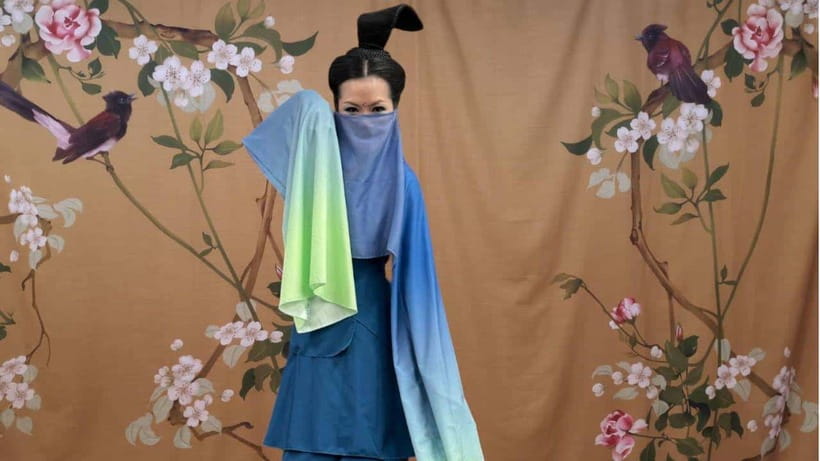
The activity begins with selecting a Hanfu outfit from the styles available on site. Hanfu refers to traditional Chinese clothing associated with the Han people, and the flowing shapes make a strong visual contrast with ordinary sightseeing clothes.
The staff help you choose from the available options, but the exact selection depends on what is suitable for your height and weight. That is why giving those measurements before the activity is important. The operator does not promise a refund if no appropriate Hanfu is available, so treat the clothing arrangement as something to confirm before booking.
The session includes one Hanfu set per person. Simple hair accessories and other accessories are also available for free matching. You can add those pieces yourself with help from the staff, but hair and makeup are not included. If you want a more elaborate look, do your hair and makeup before arriving.
This limitation is easy to understand, but it is worth keeping in mind. The activity provides a quick cultural styling element, not a professional photo studio service. One particularly strong part of Ayya’s instruction is the personal help with styling and posing. If Ayya is leading your session, you can expect friendly assistance with arranging the outfit and getting ready for the camera.
The clothing also helps set the mood for the guzheng lesson. You are not simply sitting down at an instrument in everyday clothes. The Hanfu gives the activity a sense of occasion, even though the class remains relaxed and suitable for beginners.
Forty minutes of guzheng practice
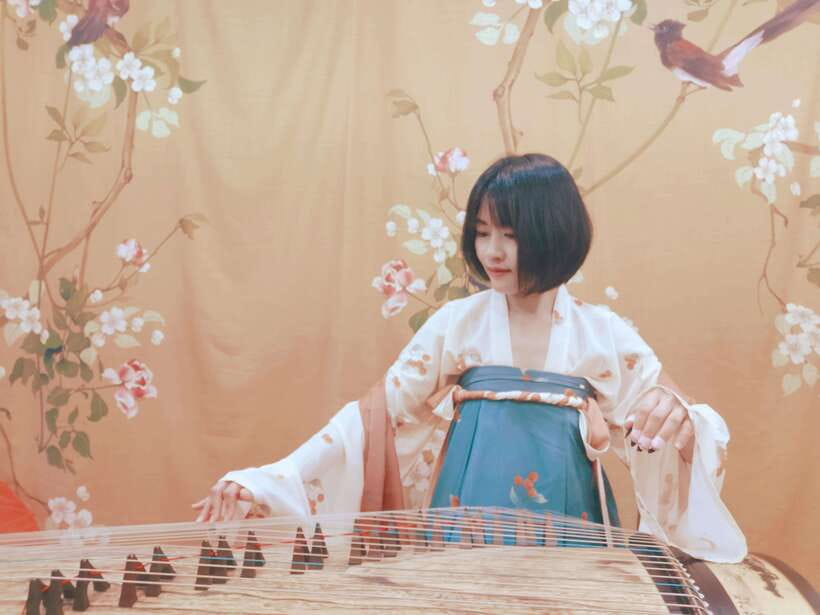
Once dressed, you receive a guzheng and the accessories needed for the lesson. Each participant has an instrument to use during the class, rather than taking turns with one shared guzheng.
The teacher explains the basic playing method and guides you through a song. You can discuss the repertoire with the instructor on site, or the teacher can choose a suitable piece. Since the session is only one hour long, the selected music needs to be simple enough to learn quickly.
That does not mean the lesson is shallow. The teacher has enough time to show you the notes, break the melody into manageable pieces, and let you practice before the recording. One guest specifically praised the fact that learning the notes and melody was simple, and that the piece could be played after roughly half an hour of practice.
Your experience will depend partly on the song chosen and partly on how quickly you follow the teacher. Some people will pick up the sequence fast. Others may need more repetition. The important point is that the class is designed around completion, not mastery. You are learning a short piece for a one-hour experience, not beginning a long-term guzheng course.
The instructors are repeatedly praised for patience, kindness, and a good sense of humor. That makes a real difference here. A traditional instrument can feel intimidating at first, especially when someone is filming you, but a patient teacher gives you room to make mistakes without turning the lesson into a test.
Ayya is described as especially fun and encouraging, with a teaching style that makes errors feel harmless. Another strong point is language support. Instruction is available in Traditional Chinese, English, and Japanese, so you can ask questions and follow corrections without relying only on gestures.
The guzheng portion is the heart of the activity. If you care mainly about dressing up for photographs, you may find the forty-minute lesson longer than expected. If you want an activity where you actually do something with Chinese culture, the music practice is what gives the experience its value.
A different sort of day out in Taipei:
- 5-Day Best of Taiwan: Sun Moon Lake, Tainan, Kaohsiung, Hualien
★ 5.0 · 578 reviews - Small-Group: Yehliu, Jiufen & Pingxi Day Tour from Taipei
★ 4.5 · 463 reviews - Private Tour to Jiufen, Yehliu Geopark, and Pingxi
★ 5.0 · 435 reviews - 4-Hour Morning Cycling City Tour (incl. breakfast)
★ 5.0 · 407 reviews
The final ten minutes: recording your short video
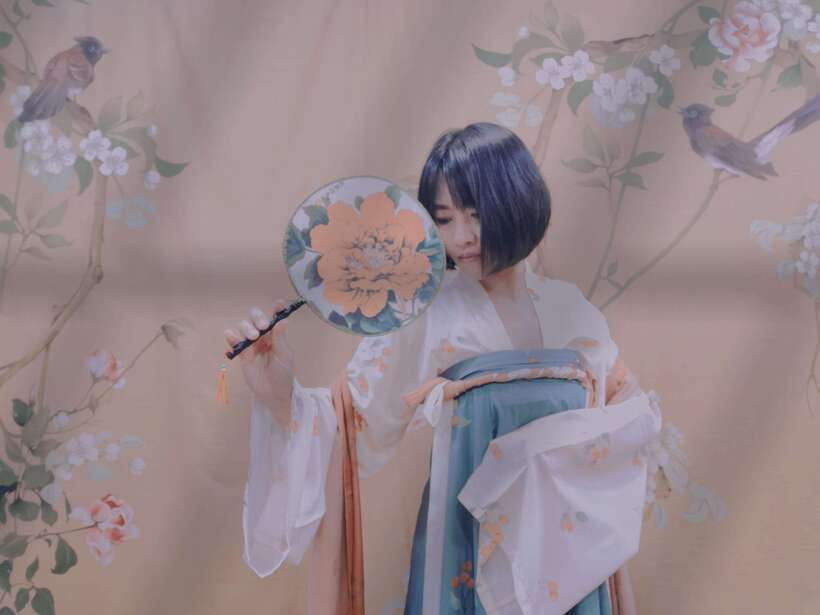
The last part is a short video recording. You perform the melody you have practiced while wearing Hanfu, with the staff helping you prepare for the camera.
This is a useful finish because it gives you a clear keepsake. You are not expected to deliver a concert. The recording is a record of what you learned during the hour, and the instructor can help with posing and presentation.
Photography and posing are another strong part of the service. Ayya is praised for taking photographs, helping participants pose, and creating a comfortable setting for people who may not be used to being filmed in traditional clothing. That assistance is especially helpful for solo participants, who might otherwise have no easy way to capture the experience.
The schedule is strict, though. Ten minutes is enough for a short recording, not a long photo session with many outfit changes. There is one Hanfu set per person, and the activity does not include professional styling. Keep your expectations realistic and you should leave with a pleasant, personal record rather than an elaborate studio production.
Is $50 good value for one hour?
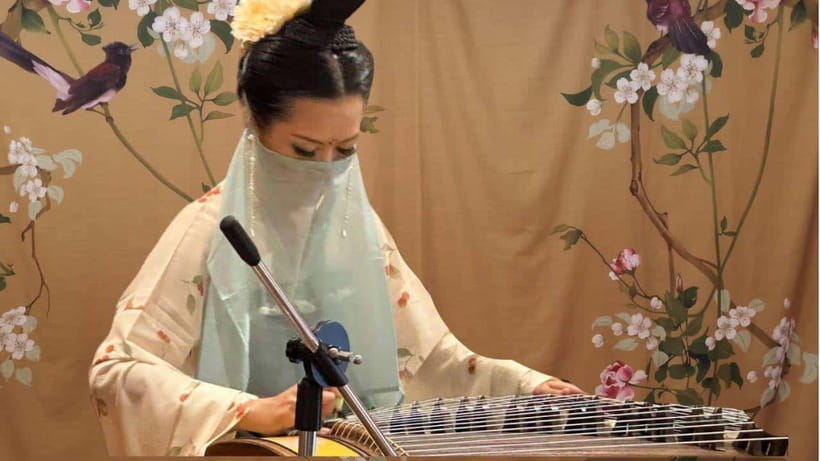
At $50 per person, this is not the cheapest way to spend an hour in Taipei. Its value comes from combining several services in one compact session: Hanfu rental, accessories, individual guzheng use, instruction, and a short video.
If you paid separately for traditional clothing, a cultural music class, and help taking photographs, the combined cost could be higher. You also save time because everything happens in one location close to the MRT station.
The value is strongest for someone who wants a memorable activity rather than a standard sightseeing stop. You are learning a song, wearing traditional clothing, and receiving a finished recording. The experience also works well for a solo visitor, which is not always true of photo-oriented cultural activities.
The value is weaker if you only want a quick costume change. Forty minutes of guzheng practice takes up most of the session, and the clothing selection is limited to what is available in your size. You should also remember that hair and makeup are not included.
The rating is excellent, and the praise centers on specific qualities: patient teaching, beautiful clothing, easy access from the station, friendly help, and the satisfaction of playing a song by the end. Those are the areas where I would expect the activity to deliver best.
Who should book this experience?
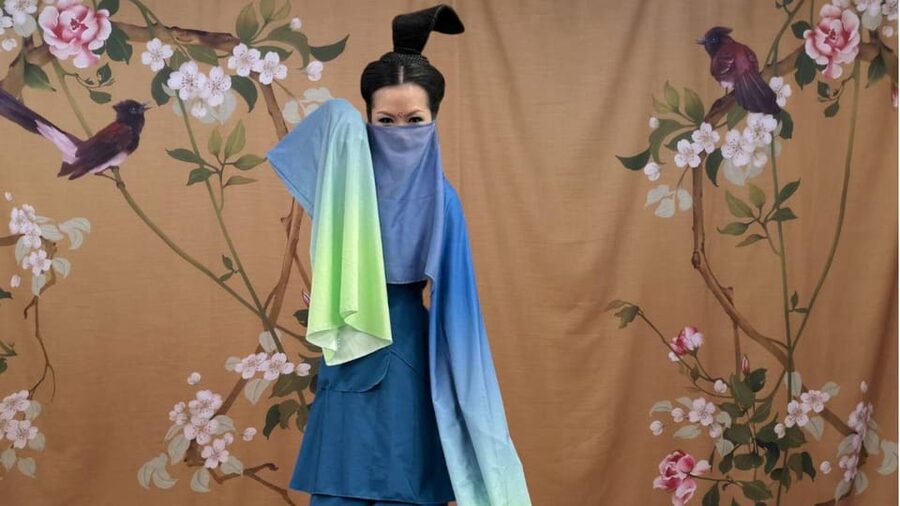
This is a strong choice for adults and children aged ten or older who want a hands-on cultural activity in Taipei. You do not need a musical background, and you can participate alone. The three-language instruction makes it suitable for English-speaking and Japanese-speaking visitors as well as those who use Traditional Chinese.
It is particularly good for:
- Solo visitors who want an activity with built-in guidance and photographs
- Couples or friends who want matching cultural photographs and a shared lesson
- Families with children aged ten or older who can manage the stairs and follow a one-hour class
- People who enjoy creative activities more than passive sightseeing
- Anyone interested in Chinese music but unsure about committing to a longer class
It may not suit you if you have difficulty climbing stairs. The classroom is on the second floor and there is no elevator, and the activity is not suitable for people with mobility impairments.
It is also not the right pick if you expect a full makeover. You need to handle your own hair and makeup, and the available accessories are simple. The focus is learning guzheng and making a short video while dressed in Hanfu.
Timing, language, and cancellation details
The activity lasts one hour and is offered at scheduled starting times, subject to availability. Book at least three days ahead so the operator has time to prepare clothing based on your height and weight.
The maximum group size is four, although your session may include other participants. The instructor can teach in Traditional Chinese, English, or Japanese. Single participants are welcome, so you do not need to find a partner before booking.
You can cancel up to 24 hours before the activity for a full refund. The reserve-now, pay-later option may also help if your Taipei schedule is still changing.
Arrive on time, use MRT Beitou Station Exit 2, and wear clothes that are easy to change. Those three simple steps will remove most of the avoidable stress.
Should you book Wear Hanfu and Play Guzheng?
I would book this if you want a short, unusual activity that lets you participate rather than simply pose. The guzheng lesson is accessible, the clothing adds a strong visual element, and the short video gives you something personal to take away. The patient instruction is the biggest reason this works for beginners.
I would skip it if you want a professional makeover, a private photo shoot, or a longer music lesson. Check your clothing measurements, be comfortable with the second-floor stairs, and remember that the musical lesson is the main event.
For the right visitor, $50 buys a well-organized hour in Beitou with a real activity at its center. You leave having learned a simple guzheng song, not just having borrowed a costume.
FAQ
Where does the Hanfu and guzheng activity meet?
Meet at Exit 2 of Beitou MRT Station. Turn left after leaving the station, cross the road, and walk for about one minute to No. 13-3, Lane 2, Guangming Road, Beitou District, Taipei City.
How long does the activity last?
The experience lasts one hour. About ten minutes are used to choose and change into Hanfu, forty minutes are for guzheng teaching and practice, and ten minutes are for recording a short video.
Do I need musical experience?
No. The activity is designed for people with no musical background. You do not need to read staff notation or know how to play another instrument.
Which languages are available?
Teaching is available in Traditional Chinese, English, and Japanese.
Is hair and makeup included?
No. Hair and makeup are not included. Simple hair accessories and other accessories are provided for you to use, but you should do your own hair and makeup before arriving if desired.
Is the classroom accessible by elevator?
No. The classroom is indoors on the second floor and there is no elevator. The activity is not suitable for people with mobility impairments.
Recently added in Taipei
- Keelung Shore Excursion: Private 6H Natural Wonder & Seafood Tour★ 5.0 · 3 reviews
- One-way Private Transfer between Jiufen and Taipei★ 5.0 · 3 reviews
- 8-Day Around Taiwan Private Tour★ 5.0 · 3 reviews
- National Palace Museum Northern Branch Taiwan Admission★ 4.5 · 3 reviews
- 12hrs – Chiayi Meteor Garden Classic Tour From Taipei★ 5.0 · 3 reviews
- Yilan 1-Day Private Tour to Kavalan Whisky & Cultural Gems★ 4.5 · 3 reviews
- Best of Taiwan 9 Days Tour★ 3.5 · 3 reviews
- Full Day Private History Tour in Taipei City★ 4.5 · 3 reviews