
Reviewed · NIGHT MARKET FOOD TOURS
Street Food Cooking Class in Taipei : Gua Bao/Lu Rou Fan/Boba Tea
Taipei’s best lessons may fit in a bun. This two-hour CookInn Taiwan class turns famous xiao chi, or small eats, into a hands-on meal: you make gua bao, braised pork, and bubble tea rather than simply ordering them. I like the small maximum of eight people, and I like that the class ends with food you prepared yourself. The main consideration is the price, $79 per person, which is fair for a focused cooking lesson and meal, but more than a quick street-food snack.
The 2:30 pm class at CookInn Taiwan’s Zhongshan classroom is a good break from sightseeing. I especially like the practical mix of Taiwanese staples and the chance to make tapioca pearls from scratch, though boba takes more effort than it looks. Come hungry, and leave room for a proper tasting session at the end.
In This Review
- Key Points To Know Before You Book
- Why This Class Fits Taipei So Well
- Arriving At CookInn Taiwan’s Zhongshan Classroom
- Making Gua Bao From Bun To Filling
- Understanding Lu Rou Fan’s Braised Pork
- Rolling And Shaking Homemade Boba Tea
- Sitting Down To Eat Your Handmade Meal
- How Much Value Do You Get For $79?
- Who Should Book This Two-Hour Class?
- Timing, Cancellation, And Practical Details
- Should You Book The CookInn Taiwan Class?
- FAQ
- Where does the cooking class meet?
- What time does the class start?
- How long does the experience last?
- What dishes will I make?
- Do I get to eat the food I prepare?
- How large is the group?
- Is the ticket available on a mobile device?
- Is the class suitable for children?
- What is the price?
- Can I cancel for a refund?
Key Points To Know Before You Book
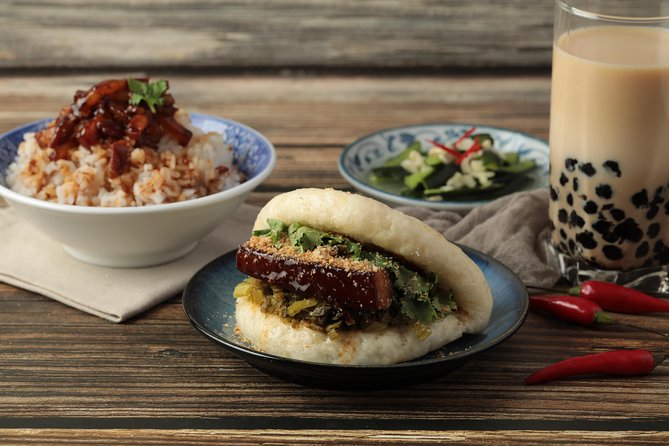
- Three Taiwanese favorites in two hours: Make gua bao, lu rou fan, and bubble milk tea in one compact lesson.
- Small class size: The maximum is eight people, allowing room for questions and individual help.
- Gua bao is the star: You prepare the steamed bun and learn how to braise the pork belly that fills it.
- Boba from scratch: You form chewy tapioca pearls yourself, then shake your own drink.
- Family-friendly instruction: One class successfully involved children ages 8, 10, and 11.
- A meal, not just a demonstration: You sit down and eat what you made before returning to the meeting point.
Why This Class Fits Taipei So Well
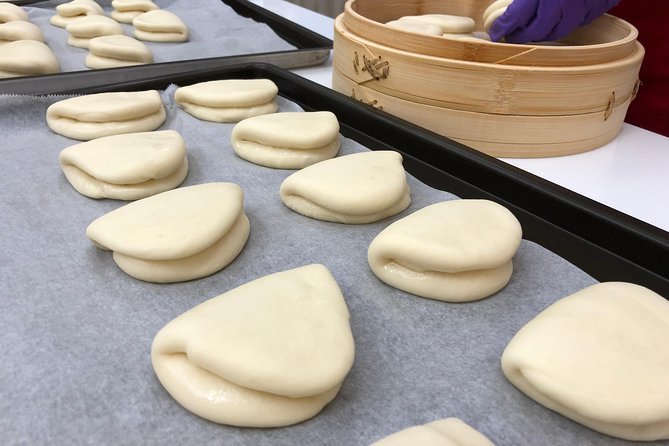
Taiwanese food is often introduced through night markets and small food stalls. That is a fine way to eat, but a cooking class gives you a different view. You learn what goes into the soft bun, how pork takes on its savory flavor, and why bubble tea has such a satisfying chew.
The focus is xiao chi, a term for small eats. These are not minor foods in Taiwanese culture. They are everyday favorites, quick meals, snacks, and dishes people return to again and again. Gua bao and lu rou fan are especially useful choices for a class because they show two different sides of Taiwanese cooking.
Gua bao combines a pillowy steamed bun with braised pork belly. Lu rou fan places braised pork over rice. The pork links the two dishes, while the bun and rice give you different ways to enjoy the same basic flavor family. Bubble tea adds a playful finish and gives you a cooking task that feels very different from the savory dishes.
I like this range. In two hours, you are not making three versions of the same thing. You are working with dough, braising, and tapioca pearls. That makes the class more memorable and gives you several techniques to try again at home.
More night market food tours:
- [Private Tour] Shilin Night Market Walking Tour With a Private Tour Guide (2-hr)
★ 5.0 · 123 reviews - Taipei Hidden Eats, Market & Street Food Tour with 8+ Tastings
★ 5.0 · 109 reviews - Taipei Food Tour: Night Market & Convenience Store(Food Included)
★ 4.5 · 100 reviews
Arriving At CookInn Taiwan’s Zhongshan Classroom
The meeting point is CookInn Taiwan, Zhongshan classroom, at 66 Section 1, Chengde Road, second floor, in Taipei’s Datong District. The class begins at 2:30 pm and returns to the same location when it ends.
Because the classroom is in a working urban district rather than at a major tourist sight, plan your route before the start time. The meeting address includes the building number, floor, and Chinese district name, which is useful when checking your map. A mobile ticket is accepted, and confirmation is provided when you book.
The timing works well if you want a morning sightseeing plan followed by food. It also leaves your evening free for a night market or restaurant. I would not schedule a tight activity immediately afterward, though. The class is listed at about two hours, and the final meal is part of the experience, not a rushed afterthought.
The group limit of eight matters here. Cooking around a shared table can become awkward when too many people reach for the same ingredients or wait for help. With eight or fewer, you have a better chance to ask about dough, pork, or boba as you work.
Making Gua Bao From Bun To Filling
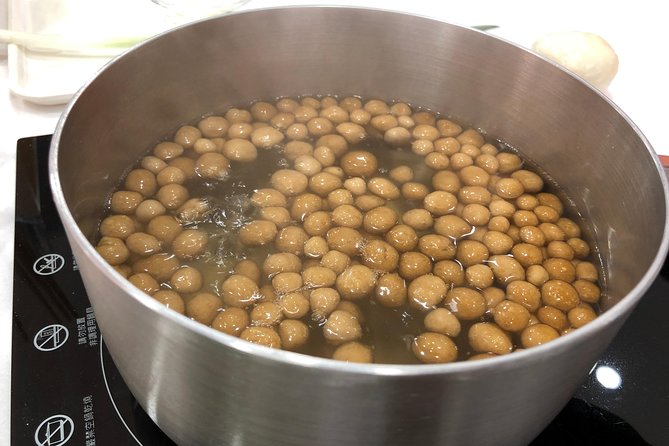
Gua bao is sometimes called the Taiwanese Hamburger, but the comparison only goes so far. The bun is steamed rather than baked, and its soft, folded shape holds braised pork belly instead of a grilled patty.
The class teaches you to make the steamed buns. This is one of the most useful parts of the lesson because the bun is not just a container. Its texture is central to the dish. A soft, well-made bun balances the rich pork and makes the whole bite work.
You also learn the basics of braising classic pork belly. This is where the class moves beyond a recipe card. The instructor can show you the order of the steps and explain how the pork develops its flavor. You may not become an expert braiser in one afternoon, but you will understand the process better than you would by eating the finished dish at a stall.
The food itself receives the strongest praise from the class. The gua bao is repeatedly singled out as delicious, with one participant calling it the star of the meal. That makes sense: it combines the most hands-on dough work with the reward of assembling a finished bun.
Children can take part here, too. The teacher Angela was praised for patiently involving children ages 8, 10, and 11 in every part of the class. That does not mean every child will enjoy every step, but the lesson has proved workable for a family group.
Understanding Lu Rou Fan’s Braised Pork
Lu rou fan is one of Taiwan’s classic rice dishes. It is simple in appearance, a bowl of rice with braised pork, but the pork carries the character of the dish.
In class, you learn the braising technique that also supports the gua bao. One account notes that the rice was prepared ahead while the group made the pork and buns. That arrangement can save time in a two-hour lesson and keeps attention on the more instructive tasks.
This is worth knowing if you expect to cook every single component from the beginning. The class is designed around selected techniques rather than a full restaurant-style production. You still make the main elements and sit down to eat them, but some preparation may be handled before you arrive.
I see that as a sensible trade-off. Making steamed buns, braised pork, and tapioca pearls within two hours already fills the schedule. The rice is the quiet partner in the dish, while the pork is where your work and the instructor’s guidance matter most.
The lu rou fan also gives you a useful home-cooking lesson. Gua bao is fun and distinctive, but a bowl of rice topped with braised pork may be easier to recreate on an ordinary weeknight. If you want a dish that can become part of your regular kitchen routine, pay close attention during this section.
More tea experiences:
- Thousand Island Lake and Pinglin Tea Plantation from Taipei
★ 4.5 · 172 reviews - Xiao Long Bao, Beef Noodles & Boba Tea Cooking Class in Taipei
★ 5.0 · 159 reviews - Tea of Taipei: Small-Group Tour with Taipei City Sightseeing
★ 5.0 · 63 reviews - Pinglin Tea Culture & Maokong Day Tour from Taipei
★ 5.0 · 35 reviews
Rolling And Shaking Homemade Boba Tea
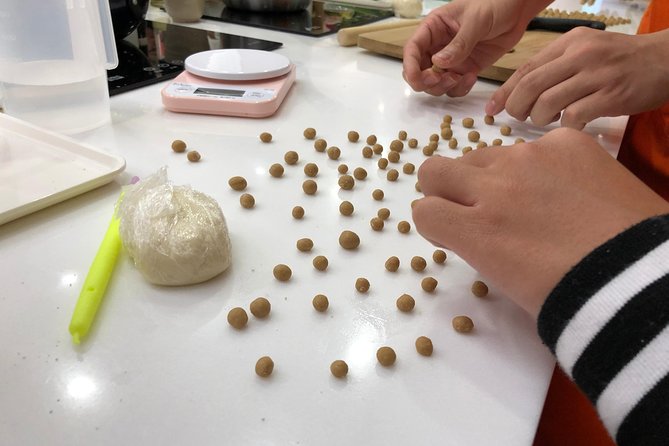
Bubble milk tea is one of Taiwan’s best-known modern food exports. In this class, you do more than pour a drink over purchased pearls. You make the chewy tapioca pearls from scratch, then prepare and shake your own cup of bubble milk tea.
This is the most playful part of the class, but it is also the part that may test your patience. One participant described making boba as an amazing process and very hard. That is useful advice. The pearls look simple, yet getting the right texture requires care.
The work gives you a better sense of why boba is so distinctive. The drink is not only about sweetness or tea. The chewy pearls change the pace of drinking and turn a normal beverage into a snack as well.
If you are cooking with children, this section may be a highlight. Shaping the pearls and shaking the drink offer clear tasks, and the finished result is easy to enjoy. Adults may find it equally entertaining, especially if you have only known bubble tea as a purchased drink.
Do not expect the class to turn you into a professional bubble-tea maker after one session. The value is in learning the basic process and understanding the texture. You can then practice at home, with less mystery about what those dark, chewy pearls actually require.
Sitting Down To Eat Your Handmade Meal
The class ends with a shared meal of the food you prepared. This is important. A cooking lesson that sends you away with a few samples can feel incomplete, but here the final tasting gives each task a purpose.
You can compare the gua bao, lu rou fan, and bubble tea while the techniques are still fresh. The meal also helps you notice the balance between the dishes. The pork is rich, the bun is soft, the rice is filling, and the drink adds a sweet, chewy finish.
The food quality receives consistent praise. The instructor is described as friendly and helpful, and the finished dishes are described as delicious. Angela is specifically praised for clear explanations and an engaging teaching style.
One useful extra is a recipe book. A participant considered it a strong souvenir and planned to use the recipes at home. Since the supplied details do not state that every booking includes one, treat it as a possible bonus rather than the main reason to book.
I would also consider the meal part of the $79 value. You are not paying only for ingredients. You are paying for instruction, a small group, a prepared tasting, and the chance to repeat the dishes later. If you only want to eat gua bao once, a street stall costs less. If you want a skill and a story to take home, the comparison changes.
How Much Value Do You Get For $79?
At $79 per person, this is not the cheapest food activity in Taipei. You can eat very well for much less at a market or neighborhood shop. The question is what you want from the afternoon.
The price makes more sense if you value:
- Personal guidance in a group capped at eight
- Instruction in three recognizable Taiwanese foods
- A complete meal at the end
- A recipe book if provided for your session
- A family activity that can include children
- Techniques you can attempt again at home
The class is also a good choice if you have limited time in Taipei. Instead of fitting separate food stops into a busy day, you get a compact introduction to several well-known dishes in one place.
The value is weaker if you dislike hands-on cooking, want a long market visit, or mainly want the lowest possible food cost. This is a lesson with eating included, not a food tour through several neighborhoods. You will spend the afternoon in the classroom rather than moving from stall to stall.
The rating is five out of five from 22 reviews, with 100 percent recommending it. That is a small sample, but the praise is consistent in the areas that matter most: the instructor, the gua bao, the family-friendly teaching, and the fun of making boba.
Who Should Book This Two-Hour Class?
I would recommend it to first-time visitors who want a clear introduction to Taiwanese food without a full-day commitment. It also suits people who have already eaten at night markets and now want to understand how some favorite dishes are made.
Families should give it serious thought. The class has already worked well with children ages 8, 10, and 11, and Angela was praised for including them. Hands-on tasks can make the food more meaningful for children than simply placing another dish on the table.
Couples and small groups will also find the format comfortable. The eight-person limit keeps it personal without making the activity feel private or expensive in the way a fully private lesson might.
I would be more cautious if you have no interest in pork. Gua bao and lu rou fan both center on braised pork, so the class’s main savory dishes are built around it. The supplied details do not mention vegetarian substitutions, so you should ask CookInn Taiwan before booking if that matters to you.
Timing, Cancellation, And Practical Details
The start time is 2:30 pm, and the activity lasts about two hours. It begins and ends at CookInn Taiwan’s Zhongshan classroom, with no separate return transfer.
You receive booking confirmation at the time of purchase, and the ticket is mobile. The maximum group size is eight people. Cancel at least 24 hours before the local start time for a full refund. Cancellations or changes made less than 24 hours before the start are not refunded or accepted.
The class requires a minimum number of participants. If CookInn Taiwan cancels because that minimum is not reached, you are offered another date or experience, or a full refund.
Should You Book The CookInn Taiwan Class?
Book it if you want more than a meal. The class gives you a practical introduction to gua bao, lu rou fan, and bubble tea, with enough personal attention to ask questions and correct mistakes. The homemade meal and possible recipe book add real value.
Skip it if your priority is cheap eating or a moving food walk through Taipei. At $79, the class asks you to pay for teaching as well as food. For families, curious cooks, and anyone who wants to carry Taiwanese food skills home, that is a reasonable trade.
FAQ
Where does the cooking class meet?
The class meets at CookInn Taiwan’s Zhongshan classroom, 66 Section 1, Chengde Road, second floor, Datong District, Taipei City, Taiwan.
What time does the class start?
The class starts at 2:30 pm.
How long does the experience last?
The cooking class lasts approximately two hours.
What dishes will I make?
You will learn to make gua bao, braised pork for gua bao and lu rou fan, and bubble milk tea with tapioca pearls made from scratch.
Do I get to eat the food I prepare?
Yes. The class ends with a meal featuring the food you made.
How large is the group?
The activity has a maximum of eight participants.
Is the ticket available on a mobile device?
Yes. The experience includes a mobile ticket.
Is the class suitable for children?
The class has included children ages 8, 10, and 11, and the instructor patiently involved them in the cooking.
What is the price?
The price is $79 per person.
Can I cancel for a refund?
You can cancel at least 24 hours before the local start time for a full refund. Cancellations or changes made less than 24 hours before the start are not accepted or refunded.
More hands-on workshops
- Taipei Calligraphy Workshop (DIY incl.)
★ 5.0 · 19 reviews - Xiao long bao, Pork thick soup, Bubble milk tea. (Taiwan Cooking Class)-B
★ 5.0 · 18 reviews - Taiwanese Gourmet Cooking Class in Taipei
★ 5.0 · 18 reviews - Taiwanese Food Culture and Cooking Class
★ 5.0 · 16 reviews
More cooking classes
- Xiao Long Bao, Chicken vermicelli with mushroom and sesame oil, Tofu strips salad, Bubble milk tea. Taiwan Traditional Delicacies Experience-A (Taipei Cooking Class)
★ 5.0 · 79 reviews - Taipei Cooking Class & Market Adventure in Historic Dadaocheng
★ 5.0 · 77 reviews - Xiao Long Bao & Boba Tea Cooking Class in Taipei
★ 5.0 · 28 reviews - Xiao Long Bao, Pork thick soup, Bubble milk tea. Taiwan Traditional Light Meals Experience-B (Taipei Cooking Class)
★ 5.0 · 24 reviews
Recently added in Taipei
- Keelung Shore Excursion: Private 6H Natural Wonder & Seafood Tour★ 5.0 · 3 reviews
- One-way Private Transfer between Jiufen and Taipei★ 5.0 · 3 reviews
- National Palace Museum Northern Branch Taiwan Admission★ 4.5 · 3 reviews
- 8-Day Around Taiwan Private Tour★ 5.0 · 3 reviews
- 12hrs – Chiayi Meteor Garden Classic Tour From Taipei★ 5.0 · 3 reviews
- Yilan 1-Day Private Tour to Kavalan Whisky & Cultural Gems★ 4.5 · 3 reviews
- Best of Taiwan 9 Days Tour★ 3.5 · 3 reviews
- Full Day Private History Tour in Taipei City★ 4.5 · 3 reviews
Night Market Food Tours, compared.
Shilin Night Market Walking Tour With a Private Tour Guide (2-hr)
Read our review →
Street Food & Hidden Eats Night Market Food Tour
Read our review →
Taipei Hidden Eats, Market & Street Food Tour with 8+ Tastings
Read our review →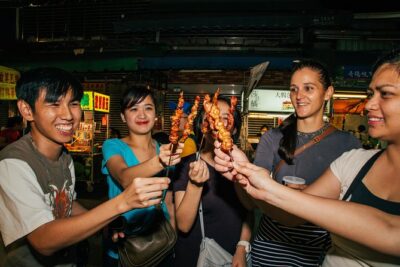
Taipei Food Tour: Night Market & Convenience Store(Food Included)
Read our review →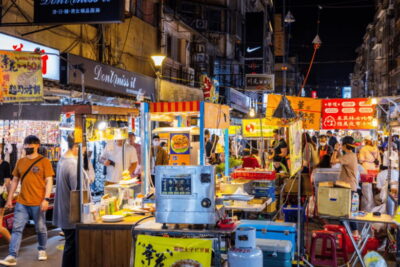
2-hr Raohe Night Market Walking Private Tour with a Tour Guide
Read our review →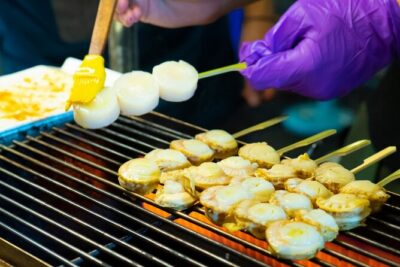
Taipei Street Food & Night Market Tour with a Local: Private & Custom
Read our review →
Browse the lists this tour appears in